
Bitcoin Fear and Greed Index Explained: A Complete Guide for Crypto Investors
Bitcoin Fear and Greed Index Explained: A Complete Guide for Crypto Investors
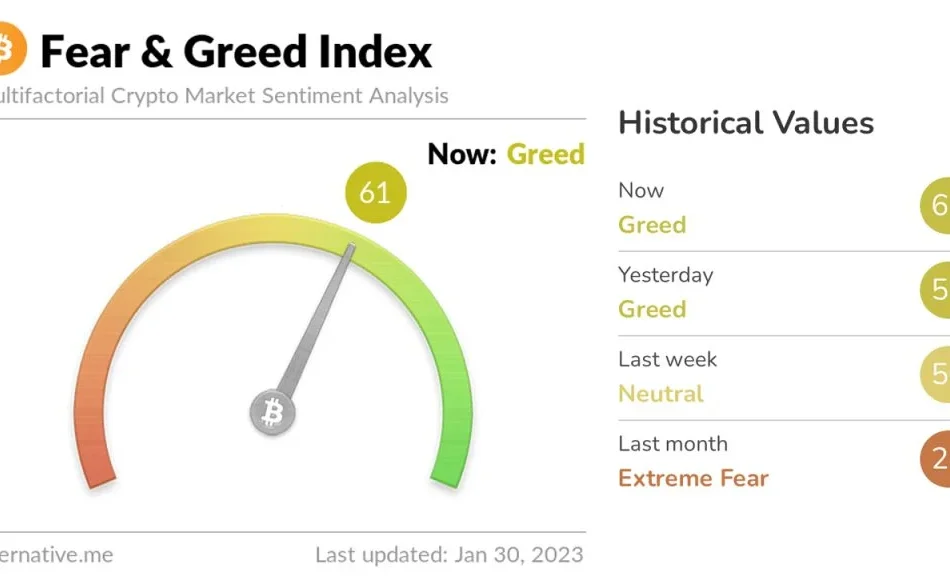
The Bitcoin Fear and Greed Index is a market sentiment indicator that measures whether crypto investors are fearful or greedy. It combines volatility, momentum, social trends, market dominance, and other data points into a score from 0 to 100. Many traders use it to identify potential buying opportunities during extreme fear and possible profit-taking periods during extreme greed.
Introduction
The crypto market is heavily driven by psychology. When prices rise rapidly, investors often become greedy and chase gains. When prices crash, fear takes over and many people sell at a loss. The Bitcoin Fear and Greed Index was created to measure these emotions and provide insight into the overall mood of the market.
What Is the Bitcoin Fear and Greed Index?
The Bitcoin Fear and Greed Index is a sentiment analysis tool that measures investor emotions in the cryptocurrency market.
The index assigns a score between 0 and 100:
| Score Range | Sentiment |
|---|---|
| 0-24 | Extreme Fear |
| 25-49 | Fear |
| 50 | Neutral |
| 51-74 | Greed |
| 75-100 | Extreme Greed |
The concept is based on a famous investing principle:
Be fearful when others are greedy, and greedy when others are fearful.
When investors become excessively fearful, Bitcoin may be undervalued. When investors become extremely greedy, Bitcoin could be overvalued or approaching a market correction.
Why Market Sentiment Matters in Bitcoin Investing
Unlike traditional assets, Bitcoin is highly influenced by investor emotions.
Several factors contribute to this:
- High volatility
- Speculative trading
- Global news events
- Social media influence
- Institutional adoption announcements
- Regulatory developments
As a result, sentiment often drives short-term price movements more than fundamentals.
Understanding market sentiment helps investors:
- Avoid panic selling
- Prevent FOMO buying
- Identify potential trend reversals
- Improve risk management
- Make more rational decisions
How the Bitcoin Fear and Greed Index Is Calculated
The index combines multiple data sources to create a single sentiment score.
Market Volatility
Bitcoin’s recent volatility is compared to historical averages.
Higher-than-normal volatility often signals fear because investors are uncertain about market direction.
Market Momentum and Trading Volume
Strong buying pressure and increasing volume generally indicate growing greed.
When traders aggressively buy Bitcoin, sentiment tends to become more optimistic.
Social Media Activity
Cryptocurrency discussions on social platforms are monitored.
An increase in positive Bitcoin conversations often contributes to higher greed scores.
Bitcoin Dominance
Bitcoin dominance refers to Bitcoin’s share of the total cryptocurrency market capitalization.
Rising dominance can sometimes indicate fear as investors move funds from riskier altcoins into Bitcoin.
Search Trends
Search engine activity provides valuable insights into investor interest.
Examples include:
- Bitcoin price prediction
- Should I buy Bitcoin now
- Bitcoin crash
- Bitcoin all-time high
Search behavior often reflects broader market sentiment.
Understanding Extreme Fear
Extreme fear occurs when the index falls below 25.
This typically happens during:
- Major market crashes
- Regulatory uncertainty
- Economic instability
- Negative crypto news
- Large liquidation events
What Extreme Fear Can Signal
Historically, extreme fear has often appeared near market bottoms.
This doesn’t guarantee prices will immediately rise, but it suggests investors may be overreacting.
Examples include:
- Bear market capitulation phases
- Significant Bitcoin corrections
- Panic-selling events
Many long-term investors view extreme fear as an opportunity to accumulate Bitcoin gradually.
Understanding Extreme Greed
Extreme greed occurs when the index exceeds 75.
This often coincides with:
- Rapid price rallies
- Bull market euphoria
- Media hype
- Increased retail participation
- Record-breaking Bitcoin prices
Risks of Extreme Greed
When greed becomes excessive:
- Investors ignore risks
- FOMO increases
- Market speculation accelerates
- Corrections become more likely
Extreme greed doesn’t automatically mean prices will crash, but it may indicate heightened risk.
How Successful Investors Use the Fear and Greed Index
Professional investors rarely rely on a single indicator.
Instead, they use the Fear and Greed Index alongside:
- Technical analysis
- On-chain metrics
- Bitcoin dominance
- Trading volume
- Macroeconomic trends
- Support and resistance levels
Contrarian Investing Strategy
Contrarian investors often do the opposite of the crowd.
Basic approach:
- Monitor sentiment levels.
- Look for extreme fear conditions.
- Conduct additional market analysis.
- Consider gradual accumulation.
- Reduce risk during extreme greed periods.
This strategy focuses on controlling emotions rather than predicting exact market tops and bottoms.
Common Mistakes Investors Make
Treating the Index as a Buy Signal
A low score does not guarantee a market bottom.
Prices can continue falling even when fear is extreme.
Ignoring Broader Market Conditions
Macroeconomic events still matter.
Interest rates, inflation, liquidity conditions, and regulations can significantly impact Bitcoin prices.
Following Sentiment Blindly
The index should support decision-making, not replace analysis.
Always combine sentiment data with:
- Risk assessment
- Portfolio management
- Technical indicators
- Fundamental research
Overreacting to Daily Changes
The index can fluctuate quickly.
Long-term investors should focus on broader trends rather than daily sentiment shifts.
Fear and Greed Index vs Technical Analysis
Many investors wonder whether sentiment analysis is better than technical analysis.
The answer is that both serve different purposes.
| Fear and Greed Index | Technical Analysis |
|---|---|
| Measures emotion | Measures price action |
| Identifies sentiment extremes | Identifies chart patterns |
| Useful for market psychology | Useful for entry and exit timing |
| Helps spot crowd behavior | Helps spot trends |
The strongest strategies often combine both approaches.
Best Practices for Using the Bitcoin Fear and Greed Index
To get the most value from this indicator:
- Use it as a sentiment tool, not a prediction tool.
- Monitor long-term trends.
- Combine it with technical analysis.
- Review on-chain Bitcoin metrics.
- Follow risk management rules.
- Maintain a long-term investment perspective.
- Avoid emotional decisions.
A Simple Framework
When Fear Is High:
- Review market fundamentals.
- Look for quality buying opportunities.
- Avoid panic selling.
When Greed Is High:
- Reassess portfolio risk.
- Consider profit-taking plans.
- Avoid chasing momentum blindly.
Related Metrics Worth Monitoring
The Fear and Greed Index becomes more powerful when paired with additional crypto indicators.
Useful metrics include:
- Bitcoin market sentiment
- Crypto market psychology
- Bitcoin volatility index
- On-chain analysis
- Bitcoin dominance chart
- Trading volume analysis
- Relative Strength Index (RSI)
- Market cycle indicators
- Crypto investor sentiment
- Bitcoin accumulation trends
- Long-term holder activity
- Bull market indicators
- Bear market indicators
- Crypto risk management metrics
- Bitcoin price prediction models
Can Beginners Use the Fear and Greed Index?
Absolutely.
The index is one of the easiest cryptocurrency indicators to understand.
Beginners can use it to:
- Learn market psychology
- Recognize emotional trading behavior
- Improve investment discipline
- Build long-term strategies
- Avoid common crypto investing mistakes
However, it should never be the sole basis for investment decisions.
Frequently Asked Questions
What is the Bitcoin Fear and Greed Index?
The Bitcoin Fear and Greed Index is a sentiment indicator that measures investor emotions in the cryptocurrency market on a scale from 0 to 100.
Is the Fear and Greed Index accurate?
It provides valuable insight into market sentiment but should be used alongside technical, fundamental, and on-chain analysis.
What does extreme fear mean in Bitcoin?
Extreme fear indicates that investors are highly pessimistic. Historically, it has often appeared during market downturns and potential accumulation phases.
What does extreme greed mean in Bitcoin?
Extreme greed suggests investors are overly optimistic, which can sometimes precede market corrections or increased volatility.
Can I trade Bitcoin using only the Fear and Greed Index?
No. The index should be part of a broader strategy that includes risk management, technical analysis, and market research.
How often does the Fear and Greed Index update?
Most versions of the index update daily to reflect changing market conditions and investor sentiment.
Is the Fear and Greed Index useful for long-term investors?
Yes. Long-term investors often use it to identify periods of excessive fear or greed and make more disciplined investment decisions.
Conclusion
Understanding the bitcoin fear and greed index explained concept can significantly improve your ability to navigate the cryptocurrency market. Rather than reacting emotionally to headlines, price swings, or social media hype, the index helps you understand how the broader market is feeling at any given moment.
While no indicator can perfectly predict Bitcoin’s future price movements, the Fear and Greed Index offers valuable insight into market psychology and investor behavior. When combined with technical analysis, on-chain data, and sound risk management, it can become a powerful part of your crypto investing toolkit.
For more expert Bitcoin investment insights, crypto market analysis, portfolio strategies, and educational resources, visit The Crypto Investors and stay ahead of the rapidly evolving cryptocurrency market.
What Is Bitcoin Halving and Why It Matters: A Complete Guide for Investors
What Is Bitcoin Halving and Why It Matters: A Complete Guide for Investors
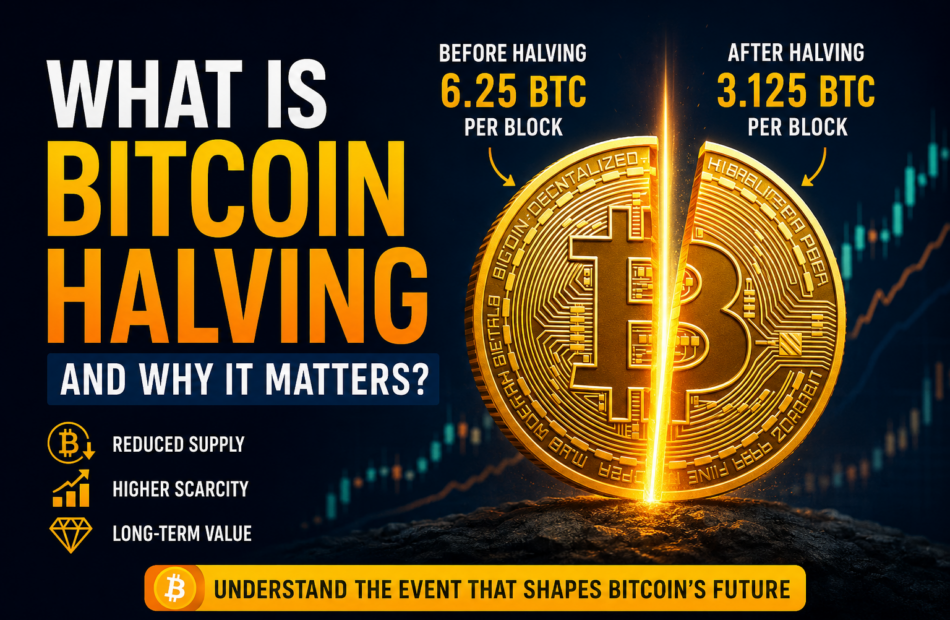
Bitcoin halving is a pre-programmed event that reduces the reward miners receive for validating transactions by 50%. It occurs approximately every four years and slows the creation of new bitcoins. This mechanism helps maintain Bitcoin’s scarcity, influences mining economics, and has historically been associated with major market cycles, making it an important event for investors and the broader cryptocurrency ecosystem.
What Is Bitcoin Halving?
Bitcoin halving is a scheduled event in the Bitcoin network that reduces the number of new bitcoins awarded to miners by 50%.
Miners validate transactions and secure the Bitcoin blockchain. In return for their work, they receive newly created bitcoins as block rewards. However, Bitcoin’s anonymous creator, Satoshi Nakamoto, designed the protocol so these rewards decrease over time.
This reduction happens after every 210,000 blocks, which takes approximately four years.
Here’s how the block reward has changed over the years:
| Bitcoin Halving Event | Year | Block Reward Before | Block Reward After |
|---|---|---|---|
| First Halving | 2012 | 50 BTC | 25 BTC |
| Second Halving | 2016 | 25 BTC | 12.5 BTC |
| Third Halving | 2020 | 12.5 BTC | 6.25 BTC |
| Fourth Halving | 2024 | 6.25 BTC | 3.125 BTC |
Eventually, Bitcoin’s maximum supply will reach 21 million coins, making it one of the scarcest digital assets in existence.
How Does Bitcoin Halving Work?
To understand why Bitcoin halving matters, it’s important to understand Bitcoin mining.
Mining involves solving complex mathematical problems using specialized computers. When miners successfully validate a block of transactions, they receive a reward in Bitcoin.
The halving mechanism automatically reduces these rewards according to Bitcoin’s code.
For example:
- Before 2024, miners earned 6.25 BTC per block.
- After the 2024 halving, miners began earning 3.125 BTC per block.
- The next halving will reduce rewards even further.
No government, company, or individual controls this process. The rules are embedded directly into the Bitcoin protocol.
Bitcoin Halving and Digital Scarcity
Scarcity plays a significant role in determining value.
Precious metals such as gold derive part of their value from limited availability. Similarly, Bitcoin’s capped supply contributes to its appeal as a store of value.
Each halving reduces the rate at which new bitcoins enter circulation.
Consider the following:
- Fewer new bitcoins become available for purchase.
- Existing holders may choose to retain their assets.
- Demand can increase while supply growth decreases.
Although scarcity alone does not guarantee higher prices, it remains a crucial factor in Bitcoin’s economic model.
Historical Impact of Bitcoin Halving on Bitcoin Price
One reason investors closely monitor halvings is the historical relationship between these events and Bitcoin price cycles.
The 2012 Bitcoin Halving
- Reward reduced from 50 BTC to 25 BTC.
- Bitcoin traded near $12 during the halving period.
- Significant price appreciation followed in the subsequent year.
The 2016 Bitcoin Halving
Rewards fell from 25 BTC to 12.5 BTC. Bitcoin traded around $650. The following market cycle saw Bitcoin reach new all-time highs.
The 2020 Bitcoin Halving
- Rewards decreased from 12.5 BTC to 6.25 BTC.
- Bitcoin traded near $8,000–$9,000.
- The years that followed witnessed substantial institutional interest and record-breaking prices.
It’s important to remember that correlation does not guarantee causation. Factors such as macroeconomic conditions, investor sentiment, regulatory developments, and adoption trends also influence Bitcoin prices.
How Bitcoin Halving Affects Miners
Bitcoin miners experience the most immediate impact from halving events.
Because block rewards decrease by 50%, mining profitability can come under pressure.
Miners typically respond in several ways:
- Upgrading to more energy-efficient hardware.
- Reducing operational costs.
- Relocating to regions with cheaper electricity.
- Relying more heavily on transaction fees.
Less efficient mining operations may struggle to remain profitable after a halving.
However, if Bitcoin prices rise over time, mining profitability can improve despite lower rewards.
Bitcoin Halving vs Traditional Monetary Systems
The contrast between Bitcoin and fiat currencies highlights why many investors find Bitcoin appealing.
| Feature | Bitcoin | Traditional Fiat Currency |
|---|---|---|
| Supply Limit | 21 Million BTC | No fixed limit |
| Inflation Control | Algorithm-based | Central bank policies |
| Issuance Schedule | Predictable | Flexible |
| Transparency | Public blockchain | Policy-driven |
| Monetary Authority | Decentralized | Centralized |
Bitcoin’s transparent and predetermined supply schedule offers a level of predictability rarely found in conventional financial systems.
Bitcoin Halving Guarantees Price Increases
No event can guarantee future returns. Historical performance should never be treated as certainty.
Bitcoin Becomes More Valuable Overnight
Market reactions often unfold gradually over months rather than immediately after a halving.
Bitcoin Halving Is a Manual Decision
The process is fully automated and coded into Bitcoin’s protocol.
What Happens After All Bitcoin Halvings Are Complete?
One of the most fascinating aspects of Bitcoin is that its monetary policy has already been defined decades into the future.
Since Bitcoin halving reduces mining rewards by 50% approximately every four years, there will eventually come a point when no new bitcoins are created. Based on the current schedule, the last bitcoin is expected to be mined around the year 2140.
At that stage:
- The total Bitcoin supply will reach 21 million BTC.
- Miners will no longer receive block rewards.
- Transaction fees will become miners’ primary source of income.
- The Bitcoin network will continue operating through decentralized validation.
This design demonstrates Bitcoin’s long-term approach to sustainability and scarcity.
Does Bitcoin Halving Always Lead to a Bull Market?
This is one of the most searched questions related to Bitcoin halving.
Historically, Bitcoin has experienced significant price appreciation in the months following previous halving events. However, investors should avoid assuming that history will repeat itself exactly.
Several factors influence Bitcoin’s price, including:
- Global economic conditions.
- Institutional adoption.
- Government regulations.
- Interest rates and monetary policies.
- Investor sentiment.
- Technological developments within the crypto industry.
The halving reduces the rate of new supply entering the market, but demand remains the determining factor behind long-term price growth.
A balanced approach involves viewing halving as one piece of a broader investment framework rather than a guaranteed profit signal.
Why Bitcoin Halving Matters Beyond Investors
Bitcoin halving doesn’t only affect traders and long-term holders. Its influence extends across the broader digital asset ecosystem.
Impact on Cryptocurrency Markets
Bitcoin often sets the tone for the wider crypto market. Major Bitcoin events can affect market sentiment and liquidity across other cryptocurrencies.
Impact on Public Awareness
Every halving cycle tends to renew public interest in Bitcoin, attracting new users and increasing educational discussions around decentralized finance.
Key Takeaways About Bitcoin Halving
If you’re still wondering what is Bitcoin halving and why it matters, remember these essential points:
- Bitcoin halving occurs approximately every four years.
- Mining rewards are reduced by 50% during each event.
- The mechanism limits Bitcoin’s supply growth.
- Bitcoin’s total supply is capped at 21 million coins.
- Historical halvings have coincided with important market cycles.
- Halving influences miners, investors, and the broader cryptocurrency ecosystem.
- Understanding halving can support more informed investment decisions.
Bitcoin halving isn’t merely a technical adjustment within the network. It represents the foundation of Bitcoin’s monetary policy and its approach to digital scarcity.
Frequently Asked Questions
What is Bitcoin halving in simple terms?
Bitcoin halving is an event that cuts the rewards miners receive for validating transactions by 50%. It occurs roughly every four years to control the supply of new bitcoins entering circulation.
Why does Bitcoin halving matter?
Bitcoin halving matters because it reduces supply growth, reinforces scarcity, impacts mining economics, and often influences investor sentiment surrounding Bitcoin.
How often does Bitcoin halving happen?
Bitcoin halving takes place every 210,000 blocks, which is approximately every four years.
Does Bitcoin’s price always increase after halving?
No. While previous halvings have been followed by significant price increases, past performance does not guarantee future results. Market conditions and demand also play critical roles.
How many Bitcoin halvings are left?
Several halvings remain before Bitcoin reaches its maximum supply of 21 million coins. The final bitcoin is expected to be mined around 2140.
Can Bitcoin halving affect mining profitability?
Yes. Since miners receive fewer bitcoins after each halving, less efficient operations may face profitability challenges unless supported by higher Bitcoin prices or lower operating costs.
Is Bitcoin halving good for investors?
Bitcoin halving can be beneficial from a long-term perspective because it reduces supply growth. However, all investments involve risks, and investors should conduct thorough research before making financial decisions.
Conclusion
Understanding what is Bitcoin halving and why it matters is crucial for anyone interested in Bitcoin, whether you’re a curious beginner, a long-term investor, or someone exploring the future of digital assets.
Bitcoin halving is much more than a scheduled reduction in mining rewards. It is the mechanism that preserves Bitcoin’s scarcity, supports its predictable monetary policy, and differentiates it from traditional currencies with unlimited supply potential.
Although halvings have historically aligned with important periods in Bitcoin’s market evolution, they should never be viewed as guaranteed indicators of future price performance. Successful investing requires education, patience, risk management, and a long-term mindset.
At TheCryptoInvestors.com, we are committed to helping readers navigate the rapidly evolving world of cryptocurrency through research-driven insights, practical investment knowledge, and easy-to-understand educational content. If you’re looking to deepen your understanding of Bitcoin, improve your crypto investment strategy, or stay informed about major market developments, explore more expert resources available on our website.
The more you understand Bitcoin’s fundamentals today, the better prepared you’ll be to make confident decisions in tomorrow’s digital economy.