

Best Bitcoin Indicators to Watch for Smarter Trading Decisions
The best bitcoin indicators to watch include RSI, Moving Averages, MACD, Bollinger Bands, On-Balance Volume, Funding Rates, and Bitcoin-specific on-chain metrics. These indicators help traders identify trends, momentum, market sentiment, support and resistance levels, and potential reversals. Using multiple indicators together can improve decision-making and reduce the risk of false signals in volatile cryptocurrency markets.
INTRODUCTION
Bitcoin remains the most closely watched asset in the cryptocurrency market. However, its price can move rapidly, making it difficult for traders and investors to identify the right entry and exit points. This is why understanding the best bitcoin indicators to watch is essential for anyone looking to navigate market volatility with greater confidence.
Technical indicators and on-chain metrics provide valuable insights into market trends, momentum, sentiment, and potential price reversals. While no indicator guarantees success, combining several reliable tools can significantly improve your decision-making process.
This guide covers the most effective Bitcoin indicators, explains how they work, and shows how traders use them to analyze the market from both short-term and long-term perspectives.
Why Bitcoin Indicators Matter
Bitcoin trades 24/7 and is influenced by multiple factors, including:
- Market sentiment
- Institutional adoption
- Macroeconomic conditions
- Regulatory developments
- Supply and demand dynamics
- Blockchain activity
Because of these factors, traders rely on indicators to:
- Identify trends
- Measure momentum
- Spot potential reversals
- Manage risk
- Confirm trading signals
Instead of relying on emotions, indicators help traders make more objective decisions.
Quick Comparison of the Best Bitcoin Indicators
| Indicator | Purpose | Best For |
|---|---|---|
| RSI | Momentum measurement | Overbought and oversold conditions |
| Moving Averages | Trend identification | Trend-following strategies |
| MACD | Trend and momentum | Entry and exit signals |
| Bollinger Bands | Volatility analysis | Breakouts and reversals |
| Volume Indicator | Market participation | Trend confirmation |
| OBV | Volume flow tracking | Price movement validation |
| Funding Rates | Market sentiment | Futures analysis |
| MVRV Ratio | On-chain valuation | Long-term Bitcoin cycles |
| Puell Multiple | Miner behavior | Market tops and bottoms |
| Hash Ribbon | Miner capitulation | Long-term accumulation zones |
Relative Strength Index (RSI)
The Relative Strength Index is one of the most popular momentum indicators in cryptocurrency trading.
RSI measures the speed and magnitude of price movements on a scale from 0 to 100.
How RSI Works
- Above 70 = Potentially overbought
- Below 30 = Potentially oversold
- Around 50 = Neutral momentum
Example
If Bitcoin’s RSI rises above 70 after a strong rally, it may indicate that buyers are becoming exhausted. Conversely, an RSI below 30 could suggest a potential buying opportunity.
Why Traders Use RSI
- Easy to understand
- Effective for spotting momentum shifts
- Useful in both bull and bear markets
Moving Averages (MA)
Moving averages remain among the best bitcoin indicators to watch because they help identify overall market direction.
Common Moving Averages
- 50-Day Moving Average
- 100-Day Moving Average
- 200-Day Moving Average
Key Signals
Golden Cross
Occurs when the 50-day moving average crosses above the 200-day moving average.
This is generally considered bullish.
Death Cross
Occurs when the 50-day moving average falls below the 200-day moving average.
This is often considered bearish.
Benefits
- Filters market noise
- Highlights long-term trends
- Widely used by institutional traders
Moving Average Convergence Divergence (MACD)
MACD combines trend and momentum analysis into one indicator.
It consists of:
- MACD line
- Signal line
- Histogram
Bullish Signal
When the MACD line crosses above the signal line.
Bearish Signal
When the MACD line crosses below the signal line.
Why MACD Is Valuable
MACD helps traders identify trend changes before they become obvious on the price chart.
As a result, many Bitcoin traders use MACD alongside RSI for confirmation.
Bollinger Bands
Bollinger Bands measure market volatility.
The indicator includes:
- Middle moving average
- Upper band
- Lower band
What It Shows
When the bands widen:
- Volatility is increasing
When the bands contract:
- Volatility is decreasing
Trading Insights
A breakout above the upper band can indicate strong bullish momentum.
Meanwhile, a move below the lower band may signal increased selling pressure.
Because Bitcoin often experiences explosive price moves, Bollinger Bands can be especially useful for spotting breakout opportunities.
Trading Volume
Volume is one of the simplest yet most important indicators.
It measures how much Bitcoin is being bought and sold during a specific period.
Why Volume Matters
Price movements backed by strong volume are generally considered more reliable.
For example:
- Rising price + rising volume = Strong trend
- Rising price + weak volume = Potential weakness
Practical Use
Before entering a trade, experienced traders often check whether volume confirms the move.
On-Balance Volume (OBV)
OBV combines price action and trading volume.
The indicator adds volume on up days and subtracts volume on down days.
What OBV Reveals
OBV helps identify whether money is flowing into or out of Bitcoin.
Bullish Signal
If Bitcoin’s price remains flat while OBV rises, accumulation may be occurring behind the scenes.
Bearish Signal
If price rises while OBV falls, the rally may lack strong support.
Funding Rates
Funding rates are crucial for traders participating in Bitcoin futures markets.
Positive Funding Rate
Long traders pay short traders.
This often indicates bullish sentiment.
Negative Funding Rate
Short traders pay long traders.
This can indicate bearish sentiment.
Why It Matters
Extremely high funding rates may signal excessive optimism.
Likewise, extremely negative funding rates can indicate fear and potential market bottoms.
Funding rates are often used as contrarian indicators.
MVRV Ratio
The Market Value to Realized Value (MVRV) Ratio is one of the most respected Bitcoin on-chain indicators.
What It Measures
MVRV compares:
- Current market value
- Realized value of all Bitcoin in circulation
Interpretation
High MVRV values:
- Potential market overheating
- Possible cycle top
Low MVRV values:
- Potential undervaluation
- Historical accumulation zones
Long-term investors frequently monitor this metric when evaluating Bitcoin’s position within larger market cycles.
Puell Multiple
The Puell Multiple focuses on Bitcoin miner revenue.
Why Miners Matter
Miners are responsible for securing the Bitcoin network.
Their behavior often influences market dynamics.
Bull Market Warning
When miner revenues become exceptionally high, market tops may be approaching.
Bear Market Opportunity
Historically low miner revenues have often coincided with attractive accumulation periods.
Hash Ribbon Indicator
Hash Ribbon tracks changes in Bitcoin mining activity.
Core Concept
The indicator identifies periods of miner capitulation.
Miner capitulation occurs when mining becomes unprofitable and some miners shut down operations.
Why Investors Watch It
Historically, Hash Ribbon buy signals have appeared near major Bitcoin market bottoms.
As a result, long-term investors often use this indicator to identify accumulation opportunities.
Fear and Greed Index
Although technically not a chart indicator, the Crypto Fear and Greed Index provides valuable sentiment analysis.
Fear
- Panic selling
- Market uncertainty
- Potential buying opportunities
Greed
- Excessive optimism
- Increased speculation
- Potential correction risk
This indicator helps investors understand emotional extremes in the market.
Combining Indicators for Better Accuracy
No single indicator works perfectly.
Successful traders typically combine multiple tools.
Example Strategy
Trend Analysis:
- 200-Day Moving Average
Momentum:
- RSI
- MACD
Confirmation:
- Volume
- OBV
Sentiment:
- Funding Rates
- Fear and Greed Index
On-Chain Analysis:
- MVRV Ratio
- Hash Ribbon
This multi-layered approach reduces false signals and improves confidence.
Common Mistakes When Using Bitcoin Indicators
Using Only One Indicator
Relying on a single metric can lead to poor decisions.
Ignoring Market Context
Indicators should be combined with broader market analysis.
Overtrading
Not every signal deserves action.
Patience remains one of the most important trading skills.
Chasing Lagging Signals
Many indicators are based on historical data.
Therefore, traders should use them as guidance rather than guarantees.
Which Bitcoin Indicator Is Best for Beginners?
For beginners, the most practical indicators include:
- RSI
- Moving Averages
- MACD
- Volume Analysis
These indicators are widely available, easy to understand, and effective for learning market behavior.
As experience grows, traders can incorporate advanced on-chain metrics such as MVRV, Puell Multiple, and Hash Ribbon.
Related Bitcoin Indicators and Metrics Worth Monitoring
Beyond the major indicators discussed above, traders often track:
- Bitcoin dominance
- Open interest
- Exchange inflows and outflows
- Stablecoin reserves
- Realized price
- Stock-to-flow model
- Network value to transactions ratio (NVT)
- Active wallet addresses
- Long-term holder supply
- Short-term holder supply
Together, these metrics provide a deeper understanding of Bitcoin’s market structure.
Frequently Asked Questions
What are the best bitcoin indicators to watch for beginners?
RSI, Moving Averages, MACD, and Volume Analysis are generally considered the best starting indicators because they are easy to understand and widely used.
Which indicator predicts Bitcoin price most accurately?
No indicator predicts Bitcoin prices perfectly. Combining RSI, MACD, Moving Averages, and on-chain metrics typically produces better results than relying on one indicator.
Is RSI good for Bitcoin trading?
Yes. RSI helps identify overbought and oversold conditions, making it useful for spotting potential reversals and momentum changes.
What is the best on-chain Bitcoin indicator?
Many analysts consider the MVRV Ratio and Hash Ribbon among the most reliable on-chain indicators for identifying long-term market cycles.
How many indicators should I use?
Most traders use between three and five complementary indicators to avoid information overload while still gaining multiple perspectives.
Do professional traders use Bitcoin indicators?
Yes. Professional traders, hedge funds, and institutional investors frequently use technical indicators alongside macroeconomic and on-chain analysis.
Can indicators guarantee profits?
No. Indicators are analytical tools that improve decision-making, but they cannot eliminate risk or guarantee successful trades.
Conclusion
Understanding the best bitcoin indicators to watch can dramatically improve your ability to analyze market conditions, identify trends, and manage risk effectively. Indicators such as RSI, Moving Averages, MACD, Bollinger Bands, Volume, MVRV Ratio, and Hash Ribbon each provide unique insights into Bitcoin’s behavior.
The most successful investors do not rely on a single signal. Instead, they combine technical analysis, market sentiment, and on-chain data to build a more complete view of the market.
At The Crypto Investors, we provide in-depth Bitcoin analysis, educational resources, market insights, and expert guidance to help investors make informed decisions in an evolving crypto landscape. Explore more of our Bitcoin strategy guides and stay ahead of the market with research-driven insights.

Bitcoin Weekly Market Analysis: Key Trends, Price Action, and Market Outlook
Bitcoin weekly market analysis provides a snapshot of the cryptocurrency market by examining price action, trading volume, investor sentiment, on-chain metrics, and macroeconomic developments. A consistent weekly review helps traders identify trends, assess risks, and uncover opportunities. By combining technical indicators with blockchain data, investors can better understand Bitcoin’s direction and make informed decisions in a rapidly changing market.
Introduction
Bitcoin continues to dominate the cryptocurrency market, making its weekly performance an important indicator for traders and investors alike. As the largest digital asset by market capitalization, Bitcoin often sets the tone for the broader crypto ecosystem.
Instead of focusing solely on daily price fluctuations, many investors prefer conducting a bitcoin weekly market analysis to gain a clearer perspective on market direction. Moreover, weekly analysis helps separate meaningful trends from short-term volatility. As a result, decision-making becomes more data-driven and less emotional.
Throughout each week, several factors influence Bitcoin’s price movement. These include technical indicators, on-chain activity, institutional demand, macroeconomic developments, and overall market sentiment. Consequently, understanding these elements can provide valuable insights into potential opportunities and risks.
Whether you’re a beginner entering the crypto space or an experienced investor managing a portfolio, reviewing Bitcoin’s weekly performance can significantly improve your market understanding.
Understanding Bitcoin Weekly Market Analysis
A bitcoin weekly market analysis involves evaluating Bitcoin’s performance over the previous seven days using various metrics and indicators. Rather than relying on a single data point, analysts combine multiple sources of information to build a comprehensive market outlook.
Typically, weekly analysis includes:
- Price action review
- Trading volume analysis
- Technical indicator assessment
- On-chain data evaluation
- Institutional activity tracking
- Market sentiment monitoring
- Macroeconomic event analysis
By examining these components together, investors can identify trends that might otherwise go unnoticed. Furthermore, a broader perspective often leads to better investment decisions.
Why Weekly Analysis Matters More Than Daily Noise
Short-term price swings frequently create confusion among market participants. While daily charts can be useful for active traders, they often contain excessive noise that makes trend identification difficult.
In contrast, weekly analysis provides a more reliable picture of market conditions. Additionally, longer timeframes reduce the impact of temporary market reactions and speculative trading activity.
Several benefits make weekly analysis valuable:
- Stronger trend confirmation
- Better risk management
- Reduced emotional decision-making
- Improved portfolio planning
- Clearer support and resistance levels
Consequently, many professional investors rely heavily on weekly charts when evaluating Bitcoin’s long-term direction.
Key Trends to Monitor Every Week
Successful market analysis begins with understanding the most important trends influencing Bitcoin’s performance.
Price Structure
Price structure reveals whether buyers or sellers currently control the market. Generally, bullish conditions are characterized by higher highs and higher lows. On the other hand, bearish environments often produce lower highs and lower lows.
When Bitcoin consistently forms higher lows, investor confidence tends to strengthen. Conversely, repeated failures to maintain support levels may indicate weakening momentum.
Trading Volume
Volume serves as confirmation for price movement. Without sufficient volume, even strong-looking breakouts can fail.
For example:
| Volume Behavior | Market Signal |
|---|---|
| Rising price + rising volume | Strong bullish momentum |
| Falling price + rising volume | Strong bearish pressure |
| Rising price + falling volume | Weak trend strength |
| Sideways price + low volume | Market consolidation |
Therefore, volume should always be analyzed alongside price action rather than in isolation.
Technical Indicators That Shape Weekly Bitcoin Analysis
Technical indicators help investors measure momentum, trend strength, and potential reversal points.
Moving Averages
Moving averages remain among the most trusted tools in technical analysis. Because they smooth price fluctuations, underlying trends become easier to identify.
Popular moving averages include:
- 20-week Moving Average
- 50-week Moving Average
- 100-week Moving Average
- 200-week Moving Average
When Bitcoin trades above major moving averages, market sentiment is generally considered positive. However, sustained trading below these levels may indicate growing weakness.
Relative Strength Index (RSI)
The RSI measures market momentum and identifies overbought or oversold conditions.
Common RSI interpretations include:
- Above 70 = Overbought
- Below 30 = Oversold
- Between 40 and 60 = Neutral
Furthermore, weekly RSI readings often carry greater significance than daily readings because they reflect broader market conditions.
On-Chain Metrics That Investors Should Monitor
One of Bitcoin’s biggest advantages is transparency. Unlike traditional financial markets, blockchain data allows investors to observe network activity in real time. Consequently, on-chain analysis has become an essential component of every bitcoin weekly market analysis.
Active Addresses
Active addresses measure how many users are interacting with the Bitcoin network. Generally, an increase in active addresses indicates growing participation and stronger demand.
Higher network activity may suggest:
- Increasing adoption
- Greater investor interest
- Improved network utility
- Rising transaction volume
Moreover, sustained growth in active addresses often supports long-term bullish sentiment.
Exchange Reserves
Bitcoin held on cryptocurrency exchanges can provide important clues about investor behavior. When exchange reserves decline, it often suggests that investors are moving coins into private wallets for long-term storage.
As a result, selling pressure may decrease.
On the other hand, rising exchange balances can indicate that investors are preparing to sell. Therefore, analysts frequently monitor exchange reserve trends when assessing market direction.
Hash Rate
Hash rate reflects the computational power securing the Bitcoin network. Because miners invest significant resources into their operations, hash rate growth often signals confidence in Bitcoin’s future.
A rising hash rate may indicate:
- Strong network security
- Miner confidence
- Long-term ecosystem growth
- Healthy blockchain activity
Historically, periods of increasing hash rate have often coincided with strong market fundamentals.
Institutional Activity and Market Influence
Institutional participation continues to reshape the Bitcoin market. Over the past few years, large financial institutions have entered the cryptocurrency space through investment funds, ETFs, and direct Bitcoin purchases.
Consequently, institutional activity has become an important indicator of market sentiment.
Several factors deserve attention:
- Spot Bitcoin ETF inflows
- Corporate treasury allocations
- Hedge fund exposure
- Asset manager holdings
- Pension fund investments
Notably, large-scale institutional buying can reduce available supply while increasing overall market confidence.
Signs of Institutional Accumulation
Investors frequently search for evidence of accumulation before major market moves occur.
Common signs include:
- Consistent ETF inflows
- Growth in large wallet balances
- Increased OTC trading activity
- Strong buying during market corrections
Furthermore, accumulation periods often occur quietly before substantial price appreciation becomes visible.
Macroeconomic Factors Affecting Bitcoin
Although Bitcoin was originally viewed as an independent asset, global economic conditions now play a significant role in price movements.
Therefore, every bitcoin weekly market analysis should include a review of macroeconomic developments.
Interest Rates
Central bank decisions influence liquidity throughout financial markets. When interest rates remain low, borrowing becomes more attractive and investment activity tends to increase.
As a result, risk assets such as Bitcoin may benefit.
Conversely, rising interest rates often reduce liquidity and encourage more conservative investment behavior.
Inflation Data
Inflation remains one of the most closely watched economic indicators.
For example, investors regularly monitor:
- Consumer Price Index (CPI)
- Producer Price Index (PPI)
- Inflation expectations
- Central bank inflation targets
Because inflation affects purchasing power, many investors consider Bitcoin a potential hedge against currency debasement.
US Dollar Strength
Movements in the US Dollar Index frequently influence Bitcoin’s performance. Generally, a weaker dollar supports demand for alternative assets. Meanwhile, a stronger dollar can create headwinds for risk markets.
Although this relationship is not always perfect, it remains an important factor for analysts to monitor.
Market Sentiment Analysis
Market sentiment often drives short-term price movements. While technical indicators reveal what the market is doing, sentiment indicators help explain why investors may be behaving in a certain way.
Therefore, sentiment analysis provides valuable context.
Fear and Greed Index
The Fear and Greed Index measures investor emotions.
| Score | Market Sentiment |
|---|---|
| 0-24 | Extreme Fear |
| 25-49 | Fear |
| 50-74 | Greed |
| 75-100 | Extreme Greed |
Extreme fear can sometimes create buying opportunities because investors become overly pessimistic. In contrast, extreme greed may signal excessive optimism and increased correction risk.
Social Media and Search Trends
Investor discussions often reveal changing market narratives before they appear in price action.
Analysts commonly track:
- Google search trends
- Social media engagement
- Crypto community discussions
- Market-related news coverage
Additionally, shifts in online sentiment can provide early warning signs of changing market conditions.
Building a Weekly Bitcoin Analysis Framework
Consistency is one of the most important characteristics of successful investors. Rather than making decisions based on emotions, experienced traders follow a structured analysis process.
A practical weekly framework may include:
- Review weekly candlestick patterns.
- Identify major support levels.
- Identify major resistance levels.
- Analyze trading volume.
- Examine RSI readings.
- Review moving averages.
- Evaluate on-chain metrics.
- Monitor institutional activity.
- Assess macroeconomic developments.
- Update risk management plans.
By following the same process each week, investors can improve discipline and maintain objectivity regardless of market conditions.
Common Mistakes Investors Make During Weekly Analysis
Even the most accurate market analysis can become ineffective when investors make emotional decisions. Consequently, understanding common mistakes can improve both risk management and long-term performance.
Several errors repeatedly appear among market participants:
Ignoring Risk Management
Many traders focus exclusively on potential profits while overlooking downside risks. However, preserving capital should always remain a priority.
Effective risk management includes:
- Setting stop-loss levels
- Limiting position size
- Avoiding excessive leverage
- Maintaining portfolio diversification
As a result, investors can survive periods of market volatility without significant damage to their portfolios.
Chasing Market Momentum
Rapid price increases often create excitement among investors. Nevertheless, buying solely because prices are rising can lead to poor entry points.
Instead, traders should wait for confirmation signals and evaluate broader market conditions before entering positions.
Relying on a Single Indicator
No technical indicator is perfect. Therefore, successful analysts combine multiple data sources before making decisions.
For example, traders may use:
- Price action analysis
- Trading volume
- RSI
- Moving averages
- On-chain metrics
- Market sentiment indicators
By combining several tools, investors gain a more complete market perspective.
Bitcoin Weekly Market Outlook: Bullish, Bearish, and Neutral Scenarios
Every bitcoin weekly market analysis should consider multiple outcomes rather than focusing on a single prediction.
Bullish Scenario
A bullish market environment typically includes:
- Higher highs and higher lows
- Increasing trading volume
- Positive institutional flows
- Strong on-chain activity
- Improving investor sentiment
Under these conditions, Bitcoin may continue its upward trend and potentially challenge key resistance levels.
Bearish Scenario
A bearish outlook often develops when:
- Lower highs begin forming
- Selling pressure increases
- Exchange balances rise
- Macroeconomic conditions weaken
- Market sentiment deteriorates
Consequently, Bitcoin may test lower support zones before establishing a new trend.
Neutral Scenario
At times, neither buyers nor sellers maintain clear control.
During consolidation periods:
- Price moves sideways
- Volume declines
- Volatility decreases
- Market participants wait for new catalysts
Although consolidation can appear boring, it frequently precedes significant market movements.
Key Takeaways
Before making investment decisions each week, investors should remember several important principles:
- Weekly analysis provides a broader market perspective.
- Technical indicators should be used alongside on-chain data.
- Trading volume helps confirm price trends.
- Institutional activity can influence market direction.
- Macroeconomic developments impact investor behavior.
- Market sentiment often drives short-term volatility.
- Risk management remains essential regardless of market conditions.
Most importantly, consistency matters more than perfection. Investors who follow a structured process are often better positioned to navigate changing market environments.
Frequently Asked Questions
What is a bitcoin weekly market analysis?
A bitcoin weekly market analysis is a detailed review of Bitcoin’s performance over a seven-day period. It typically includes price action, technical indicators, trading volume, on-chain metrics, investor sentiment, and macroeconomic factors.
Why is weekly analysis important for Bitcoin investors?
Weekly analysis reduces short-term market noise and provides a clearer understanding of broader trends. As a result, investors can make more informed decisions.
Which technical indicators are most useful for Bitcoin analysis?
Popular indicators include moving averages, RSI, MACD, support and resistance levels, and trading volume. Together, these tools help identify momentum and potential trend changes.
How does institutional investment affect Bitcoin prices?
Institutional demand can increase buying pressure and reduce available supply. Consequently, large inflows from ETFs and investment funds often influence market direction.
Can on-chain data predict Bitcoin’s future price?
On-chain data cannot guarantee future outcomes. However, it can provide valuable insights into network activity, investor behavior, and supply-demand dynamics.
How often should traders perform market analysis?
Most investors benefit from conducting a comprehensive weekly review while also monitoring major developments throughout the week.
What is the biggest mistake new Bitcoin investors make?
One of the most common mistakes is making emotional decisions during periods of volatility. Therefore, following a structured analysis framework can help improve consistency.
Conclusion
A comprehensive bitcoin weekly market analysis provides valuable insights into the forces shaping Bitcoin’s price movements. Rather than relying on speculation or social media narratives, successful investors use data-driven research to evaluate trends, identify opportunities, and manage risk effectively.
Throughout each week, technical indicators, trading volume, institutional participation, on-chain activity, and macroeconomic developments interact to influence market behavior. Therefore, understanding these factors can help investors make more confident decisions.
Furthermore, a structured analysis process encourages discipline and reduces emotional reactions during periods of uncertainty. Whether market conditions appear bullish, bearish, or neutral, maintaining a consistent approach remains essential for long-term success.
As Bitcoin continues to evolve as a global financial asset, staying informed becomes increasingly important. By conducting a regular bitcoin weekly market analysis, investors can better understand market trends, anticipate potential risks, and position themselves for future opportunities.
For more expert cryptocurrency insights, educational resources, investment strategies, and in-depth market research, visit The Crypto Investors and stay ahead in the rapidly evolving world of digital assets.
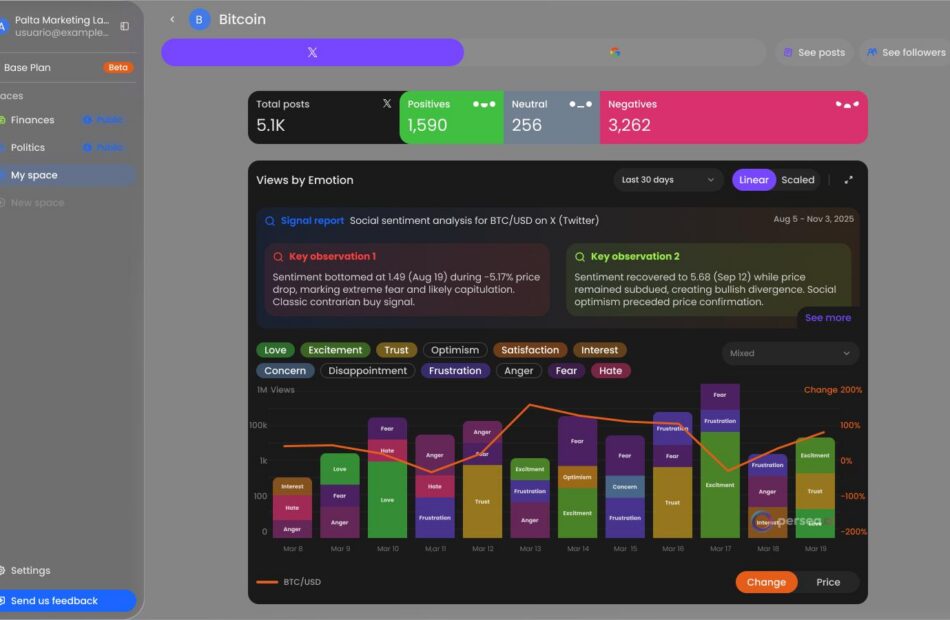
Bitcoin Market Sentiment Indicators: The Complete Guide for Smarter Crypto Investing
Bitcoin Market Sentiment Indicators: The Complete Guide for Smarter Crypto Investing
Bitcoin market sentiment indicators help investors understand whether the market is driven by fear, greed, optimism, or panic. By analyzing metrics such as the Fear and Greed Index, funding rates, social sentiment, MVRV ratio, and on-chain data, traders can identify potential market tops, bottoms, and trend reversals. These indicators are most effective when combined with technical and fundamental analysis rather than used in isolation.
Introduction
Bitcoin is often called a technology-driven asset, but market psychology plays an equally important role in determining its price. Fear, greed, optimism, panic, and investor confidence can create powerful trends that drive Bitcoin higher or lower.
This is where bitcoin market sentiment indicators become valuable. These tools help investors measure the overall mood of the market and identify whether participants are becoming excessively bullish or bearish.
Whether you’re a beginner investor, active trader, or long-term Bitcoin holder, understanding market sentiment can help you make more informed decisions, avoid emotional mistakes, and potentially identify buying or selling opportunities before the crowd reacts.
What Are Bitcoin Market Sentiment Indicators?
Bitcoin market sentiment indicators are tools and metrics used to gauge investor emotions, market confidence, and overall psychological conditions within the cryptocurrency market.
Unlike traditional technical indicators that focus on price and volume, sentiment indicators measure how investors feel about Bitcoin.
These indicators analyze data from:
- Social media platforms
- On-chain blockchain activity
- Derivatives markets
- Search trends
- Investor behavior
- Exchange flows
- Market positioning
When used correctly, sentiment indicators can provide early signals of:
- Market tops
- Market bottoms
- Trend reversals
- Investor capitulation
- Bull market acceleration
- Bear market exhaustion
Why Market Sentiment Matters in Bitcoin
Bitcoin is one of the most emotionally driven financial assets in the world.
Several factors contribute to this:
| Factor | Impact on Sentiment |
|---|---|
| High Volatility | Creates fear and greed cycles |
| Media Coverage | Influences investor behavior |
| Social Media | Amplifies market emotions |
| Limited Supply | Creates scarcity narratives |
| Speculation | Drives rapid sentiment shifts |
| Global Adoption News | Triggers bullish or bearish reactions |
Market sentiment often reaches extremes before major price reversals occur.
As legendary investor Warren Buffett once noted:
Be fearful when others are greedy and greedy when others are fearful.
This principle applies strongly to Bitcoin markets.
Bitcoin Fear and Greed Index
The Fear and Greed Index is one of the most popular bitcoin market sentiment indicators.
It measures investor emotions on a scale from 0 to 100.
| Score | Sentiment |
|---|---|
| 0-24 | Extreme Fear |
| 25-49 | Fear |
| 50 | Neutral |
| 51-74 | Greed |
| 75-100 | Extreme Greed |
How It Works
The index analyzes:
- Volatility
- Trading volume
- Social media activity
- Market momentum
- Bitcoin dominance
- Search trends
How Investors Use It
Extreme Fear:
- May signal undervaluation
- Often appears near market bottoms
- Potential accumulation opportunity
Extreme Greed:
- May signal overvaluation
- Often appears near market tops
- Risk management becomes important
Social Media Sentiment Analysis
Social media has become a major force in cryptocurrency markets.
Platforms such as:
- X (Twitter)
- Telegram
- Discord
- YouTube
can significantly influence investor behavior.
Key Signals to Monitor
Positive indicators:
- Increasing bullish discussions
- Growing Bitcoin adoption conversations
- Rising influencer engagement
Negative indicators:
- Panic selling discussions
- Excessive fear
- FUD (Fear, Uncertainty, and Doubt)
Benefits
Social sentiment can often shift before price movements occur, providing valuable early insights.
Bitcoin Funding Rates
Funding rates are among the most effective sentiment indicators used by professional traders.
They reflect positioning in perpetual futures markets.
Positive Funding Rates
When funding rates are highly positive:
- Most traders are long
- Market sentiment is bullish
- Overcrowded positions may exist
Negative Funding Rates
When funding rates turn deeply negative:
- Traders are bearish
- Short positions dominate
- Potential short squeeze conditions may develop
Practical Insight
Extremely high funding rates frequently appear near local tops, while deeply negative rates often emerge near market bottoms.
MVRV Ratio
The Market Value to Realized Value (MVRV) Ratio is a powerful on-chain sentiment metric.
Formula
MVRV Ratio = Market Cap ÷ Realized Cap
What It Measures
It shows whether Bitcoin holders are:
- Sitting on large profits
- Holding losses
- Near breakeven
Interpretation
| MVRV Level | Meaning |
|---|---|
| Above 3.5 | Potential market top |
| Around 1 | Fair value |
| Below 1 | Potential market bottom |
The MVRV ratio has historically helped identify major Bitcoin cycle turning points.
Bitcoin Exchange Flows
Exchange flow analysis measures Bitcoin moving onto and off exchanges.
Exchange Inflows
Large inflows may indicate:
- Increased selling pressure
- Profit-taking activity
- Bearish sentiment
Exchange Outflows
Large outflows may suggest:
- Long-term accumulation
- Investor confidence
- Reduced sell pressure
Many institutional investors monitor exchange flow data as part of their market sentiment analysis.
Stablecoin Supply Ratio (SSR)
The Stablecoin Supply Ratio compares Bitcoin market capitalization to stablecoin liquidity.
Why It Matters
Stablecoins often represent buying power waiting on the sidelines.
Lower SSR
- More stablecoin liquidity available
- Potential bullish environment
- Increased purchasing power
Higher SSR
- Reduced available liquidity
- Potential bearish conditions
This metric helps assess market readiness for future Bitcoin demand.
Google Trends Data
Search activity can reveal changing investor interest.
Bullish Signals
Increasing searches for:
- Buy Bitcoin
- Bitcoin ETF
- Bitcoin price prediction
- Bitcoin investment
Bearish Signals
Decreasing search volume often indicates reduced enthusiasm and investor participation.
Historical Observation
Major search spikes have frequently coincided with Bitcoin market peaks.
Bitcoin Dominance
Bitcoin Dominance measures Bitcoin’s share of the total cryptocurrency market.
Rising Dominance
May indicate:
- Investor preference for safety
- Strong Bitcoin sentiment
- Capital flowing from altcoins into Bitcoin
Falling Dominance
May indicate:
- Increased risk appetite
- Altcoin speculation
- Changing market leadership
Bitcoin dominance provides valuable context when evaluating broader crypto market sentiment.
Open Interest Analysis
Open Interest tracks the total value of active futures contracts.
Rising Open Interest + Rising Price
Usually indicates:
- Strong bullish conviction
- Trend continuation potential
Rising Open Interest + Falling Price
May indicate:
- Growing bearish sentiment
- Increased short positioning
Falling Open Interest
Often signals:
- Reduced speculation
- Position liquidations
- Market cooling
Combining Multiple Sentiment Indicators
No single indicator should be used in isolation.
The most effective investors combine several indicators to build a complete market picture.
Example Bullish Setup
- Fear and Greed Index in Extreme Fear
- Negative funding rates
- Bitcoin leaving exchanges
- MVRV near historical lows
- Stablecoin liquidity increasing
This combination may suggest a potential accumulation opportunity.
Example Bearish Setup
- Extreme Greed reading
- Excessively positive funding rates
- Massive social media hype
- MVRV above historical averages
- Sharp increase in exchange inflows
This combination may indicate elevated market risk.
Common Mistakes When Using Sentiment Indicators
Following One Metric Blindly
Markets are complex. Always combine multiple indicators.
Ignoring Broader Market Conditions
Macroeconomic events, interest rates, and ETF flows can override sentiment signals.
Acting Emotionally
Sentiment indicators should guide decisions, not replace risk management.
Chasing Hype
Excessive optimism often appears near market peaks.
Best Bitcoin Market Sentiment Indicators Ranked
| Indicator | Reliability | Use Case |
|---|---|---|
| Fear and Greed Index | High | Market psychology |
| Funding Rates | High | Trader positioning |
| MVRV Ratio | Very High | Cycle analysis |
| Exchange Flows | High | Supply dynamics |
| Open Interest | High | Futures sentiment |
| Social Sentiment | Medium | Crowd behavior |
| Google Trends | Medium | Retail interest |
| Bitcoin Dominance | Medium | Market structure |
How Long-Term Investors Can Use Sentiment Indicators
Long-term Bitcoin investors can use sentiment data to improve accumulation strategies.
Rather than attempting to time every market move:
- Monitor fear levels.
- Track on-chain metrics.
- Watch exchange outflows.
- Evaluate funding rates.
- Increase research during periods of extreme pessimism.
This disciplined approach often leads to better decision-making than reacting emotionally to short-term price fluctuations.
Frequently Asked Questions
What are bitcoin market sentiment indicators?
Bitcoin market sentiment indicators are tools that measure investor emotions, market confidence, and behavioral trends to help identify potential buying and selling opportunities.
Which sentiment indicator is best for Bitcoin?
The Fear and Greed Index, MVRV Ratio, funding rates, and exchange flow metrics are among the most widely used and reliable Bitcoin sentiment indicators.
Can sentiment indicators predict Bitcoin price?
No indicator can predict prices with certainty. However, sentiment indicators can help identify periods of excessive optimism or pessimism that often precede major market moves.
What does Extreme Fear mean in Bitcoin?
Extreme Fear suggests investors are highly cautious or panic-selling. Historically, these periods have often provided attractive long-term buying opportunities.
What does Extreme Greed mean in Bitcoin?
Extreme Greed indicates excessive optimism and speculative behavior. It may signal increased risk and possible market overheating.
Why are funding rates important?
Funding rates reveal trader positioning in futures markets and can help identify overcrowded bullish or bearish trades.
Should beginners use market sentiment indicators?
Yes. Beginners can benefit from understanding market psychology and avoiding emotional decisions by incorporating sentiment indicators into their research process.
Conclusion
Understanding bitcoin market sentiment indicators can provide a significant advantage in today’s fast-moving cryptocurrency markets. Metrics such as the Fear and Greed Index, MVRV Ratio, funding rates, exchange flows, open interest, and social sentiment help investors understand what is driving market behavior beneath the surface.
While no indicator is perfect, combining multiple sentiment signals can improve risk management, identify potential opportunities, and help investors avoid emotional decision-making.
At The Crypto Investors, we regularly publish in-depth Bitcoin analysis, on-chain research, market cycle insights, and cryptocurrency investment strategies designed to help investors navigate the digital asset landscape with greater confidence. Explore our latest resources and stay ahead of emerging Bitcoin market trends.

How to Dollar Cost Average Into Bitcoin: A Complete Beginner-to-Advanced Guide
How to Dollar Cost Average Into Bitcoin: A Complete Beginner-to-Advanced Guide
Dollar Cost Averaging (DCA) into Bitcoin is an investment strategy where you invest a fixed amount of money at regular intervals regardless of price. This approach reduces the impact of market volatility, removes emotional decision-making, and helps investors accumulate Bitcoin steadily over time. For beginners and long-term investors alike, DCA is one of the safest and most effective ways to build a Bitcoin position.
Introduction
If you’re wondering how to dollar cost average into Bitcoin, you’re not alone. Many investors want exposure to Bitcoin but struggle with one major question: When is the right time to buy?
The truth is that timing the Bitcoin market consistently is nearly impossible—even for experienced traders. Bitcoin’s price can rise or fall dramatically within days, making emotional decisions costly.
That’s where Dollar Cost Averaging (DCA) comes in. Instead of trying to predict market tops and bottoms, DCA allows you to invest a fixed amount at regular intervals, helping you reduce risk and build a long-term Bitcoin position with confidence.
In this guide, you’ll learn exactly how DCA works, why it is popular among Bitcoin investors, how to create your own strategy, and common mistakes to avoid.
What Is Dollar Cost Averaging (DCA)?
Dollar Cost Averaging is an investment strategy where you invest a fixed amount of money on a consistent schedule regardless of Bitcoin’s current price.
For example:
| Week | Bitcoin Price | Amount Invested | BTC Purchased |
|---|---|---|---|
| Week 1 | $100,000 | $100 | 0.001 BTC |
| Week 2 | $90,000 | $100 | 0.00111 BTC |
| Week 3 | $80,000 | $100 | 0.00125 BTC |
| Week 4 | $110,000 | $100 | 0.00091 BTC |
Over time, your average purchase price becomes smoother than trying to buy all at once.
This strategy is widely used in stock investing, retirement planning, index funds, and cryptocurrency investing.
Why Investors Use DCA for Bitcoin
Bitcoin is known for its volatility. Prices can swing 10%–20% in a matter of days.
Instead of worrying about short-term fluctuations, DCA helps investors focus on long-term accumulation.
Key Benefits of Bitcoin DCA
- Reduces emotional investing
- Eliminates market timing pressure
- Lowers the impact of volatility
- Builds consistent investment habits
- Suitable for beginners
- Easy to automate
- Encourages long-term thinking
For many investors, DCA removes the stress of constantly checking Bitcoin charts.
How to Dollar Cost Average Into Bitcoin Step by Step
Determine Your Investment Budget
Start by deciding how much money you can comfortably invest.
A good rule is:
- Invest only what you can afford to leave untouched for several years.
- Never invest emergency funds.
- Avoid borrowing money to buy Bitcoin.
Examples:
- $25 weekly
- $50 weekly
- $100 biweekly
- $500 monthly
Consistency matters more than the amount.
Choose Your DCA Frequency
The next step is selecting how often you’ll buy Bitcoin.
Common schedules include:
Daily DCA
Best for:
- Frequent accumulators
- Highly automated investing
Pros:
- Maximum smoothing effect
Cons:
- More transaction fees on some platforms
Weekly DCA
Best for:
- Most investors
- Salary earners
Pros:
- Balanced approach
- Easy to manage
Monthly DCA
Best for:
- Long-term investors
- Larger purchases
Pros:
- Fewer transactions
Cons:
- Slightly less averaging effect
Lump Sum vs Dollar Cost Averaging Into Bitcoin
One of the biggest debates in investing is whether to invest all at once or gradually.
| Factor | Lump Sum | DCA |
|---|---|---|
| Market Timing Required | High | Low |
| Emotional Stress | High | Low |
| Risk Exposure | Immediate | Gradual |
| Volatility Impact | High | Reduced |
| Beginner Friendly | No | Yes |
Historically, lump-sum investing can outperform during strong bull markets because money enters the market earlier.
However, DCA often wins from a behavioral perspective because investors are more likely to stick with their strategy.
Example of a Bitcoin DCA Strategy
Imagine Sarah wants to invest $6,000 into Bitcoin.
Instead of buying all at once, she invests:
- $500 every month
- For 12 months
Benefits:
- Lower emotional stress
- Reduced regret from buying near a local peak
- Consistent exposure to Bitcoin
This strategy allows Sarah to focus on accumulation rather than short-term price predictions.
Best Time to Start DCA Into Bitcoin
A common question is:
Should I Wait for a Market Crash?
Many investors spend months waiting for the “perfect entry.”
Unfortunately, nobody knows where the next bottom will occur.
A popular saying among investors is:
Time in the market beats timing the market.
If you believe Bitcoin has long-term potential, starting a disciplined DCA plan today often makes more sense than endlessly waiting.
Advanced Bitcoin DCA Strategies
Experienced investors sometimes enhance traditional DCA methods.
Value Averaging
Instead of investing a fixed amount, you adjust contributions based on portfolio performance.
Example:
- Bitcoin drops significantly → invest more.
- Bitcoin rises sharply → invest less.
This approach requires more monitoring.
Dynamic DCA
Dynamic DCA adjusts purchases according to market conditions.
For example:
- Buy 2x more during major corrections.
- Buy normal amounts during neutral markets.
- Reduce purchases during extreme euphoria.
Many investors use indicators such as:
- Bitcoin Fear and Greed Index
- MVRV Ratio
- Bitcoin Drawdown Levels
- On-Chain Metrics
Hybrid Strategy
Some investors combine:
- 80% regular DCA
- 20% opportunistic buying during market crashes
This maintains consistency while taking advantage of large discounts.
Common Mistakes to Avoid When DCAing Into Bitcoin
Investing Money You Need Soon
Bitcoin remains a volatile asset.
Avoid investing money needed for:
- Rent
- Bills
- Emergency expenses
- Short-term goals
Stopping During Bear Markets
Many investors quit when prices fall.
Ironically, bear markets often provide the most attractive accumulation opportunities.
Checking Prices Constantly
Daily price watching can lead to emotional decisions.
Remember:
The goal of DCA is consistency.
Ignoring Fees
Small fees can add up over hundreds of purchases.
Always compare:
- Trading fees
- Deposit fees
- Withdrawal fees
Failing to Secure Your Bitcoin
Security should grow with your portfolio.
As your holdings increase, consider stronger self-custody solutions.
Does Bitcoin DCA Actually Work?
Historical data suggests that long-term Bitcoin investors who consistently accumulated through multiple market cycles often achieved favorable results compared to those attempting to perfectly time entries.
Why?
Because DCA:
- Reduces emotional mistakes
- Encourages disciplined investing
- Keeps investors active during bear markets
- Benefits from long-term Bitcoin adoption trends
No strategy guarantees profits, but DCA remains one of the most widely recommended approaches for Bitcoin accumulation.
Who Should Use Dollar Cost Averaging?
DCA is ideal for:
- Beginners
- Busy professionals
- Long-term investors
- Retirement-focused investors
- People uncomfortable with market timing
It may be less suitable for investors with large lump sums and extensive market experience.
Related Bitcoin Investing Terms You Should Know
Understanding these concepts can improve your DCA strategy:
- Bitcoin accumulation
- Long-term Bitcoin investing
- Bitcoin portfolio management
- Bitcoin risk management
- Bitcoin market cycles
- Crypto investment strategy
- Bitcoin halving
- Bitcoin volatility
- On-chain analysis
- Bitcoin self-custody
- Bitcoin recurring purchases
- Crypto wealth building
- Passive Bitcoin investing
- Bitcoin bear markets
- Bitcoin bull markets
- Portfolio diversification
- Digital asset investing
- Bitcoin adoption
- Crypto dollar cost averaging
- Bitcoin investment plan
Frequently Asked Questions
Is dollar cost averaging into Bitcoin a good strategy?
Yes. DCA helps reduce volatility risk, removes emotional decision-making, and encourages consistent long-term investing.
How much should I DCA into Bitcoin each month?
Invest an amount that fits your financial situation. Consistency matters more than the size of each purchase.
Is weekly or monthly Bitcoin DCA better?
Weekly DCA often provides better price averaging, while monthly DCA is simpler and involves fewer transactions.
Can I automate Bitcoin DCA?
Yes. Most major cryptocurrency exchanges offer recurring Bitcoin purchase features.
Does DCA guarantee profits?
No. DCA reduces timing risk but cannot eliminate market risk or guarantee returns.
Should I stop DCA during a Bitcoin bear market?
Many long-term investors continue DCA during bear markets because lower prices allow them to accumulate more Bitcoin.
What is the biggest advantage of Bitcoin DCA?
The biggest advantage is removing the need to predict market movements while building a position over time.
Conclusion
Learning how to dollar cost average into Bitcoin is one of the smartest steps a new investor can take. Rather than stressing over market timing, DCA provides a disciplined framework for steadily building Bitcoin exposure over the long term.
Whether you invest weekly, biweekly, or monthly, the key is consistency. By sticking to a well-defined plan, managing risk, and focusing on long-term goals, you can navigate Bitcoin’s volatility with greater confidence.
At The Crypto Investors, we help investors understand Bitcoin, on-chain metrics, market cycles, and proven crypto investing strategies. Explore more expert guides to strengthen your knowledge and make smarter cryptocurrency investment decisions.

Bitcoin Stock to Flow Model: Complete Guide for Investors
Bitcoin Stock to Flow Model: Complete Guide to Bitcoin Scarcity and Price Prediction
The bitcoin stock to flow model is a valuation framework that measures Bitcoin’s scarcity by comparing its existing supply (stock) to newly created coins (flow). Developed by PlanB, the model suggests that Bitcoin’s price tends to increase as scarcity rises after each halving event. While widely used by investors, it should be combined with other indicators because market conditions, demand, and macroeconomic factors also influence Bitcoin’s price.
Introduction
The bitcoin stock to flow model has become one of the most discussed valuation methods in the cryptocurrency industry. Since Bitcoin is designed with a fixed supply of 21 million coins, many investors use scarcity-based models to estimate its long-term value. Among these approaches, the Stock-to-Flow (S2F) model gained significant attention for attempting to predict Bitcoin’s future price based on its scarcity.
But how does the model work? Is it reliable? And should investors use it when making Bitcoin investment decisions?
In this comprehensive guide, you’ll learn everything about the Bitcoin Stock-to-Flow model, including its formula, history, advantages, criticisms, and practical applications.
What Is the Bitcoin Stock to Flow Model?
The Bitcoin Stock-to-Flow Model is a scarcity-based valuation framework created by cryptocurrency analyst PlanB in 2019.
The model compares:
• Existing Bitcoin supply (Stock)
• Newly mined Bitcoin each year (Flow)
The core idea is simple:
Assets with greater scarcity tend to hold higher value over time.
Since Bitcoin has a limited supply and periodic halving events reduce new coin issuance, its scarcity increases over time. The model suggests this increasing scarcity should lead to higher prices.
Stock vs Flow Explained
Term Meaning
Stock Total Bitcoin current circulation
Flow New Bitcoin mined annually
Stock-to-Flow Ratio Stock ÷ Annual Flow
A higher ratio indicates greater scarcity.
Why Scarcity Matters in Bitcoin
Scarcity has historically played a significant role in determining the value of assets.
Examples include:
• Gold
• Silver
• Precious metals
• Rare collectibles
• Limited-edition assets
Bitcoin shares several characteristics with these assets:
• Fixed supply cap
• Predictable issuance schedule
• Transparent monetary policy
• Increasing scarcity over time
Unlike fiat currencies that can be printed by central banks, Bitcoin’s supply is mathematically controlled.
This feature makes Bitcoin attractive to investors seeking protection against inflation and currency debasement.
How the Bitcoin Stock to Flow Model Works
The Stock-to-Flow ratio is calculated using a straightforward formula.
Stock-to-Flow Formula
S2F Ratio = Total Existing Supply ÷ Annual New Supply
For example:
Suppose:
• Existing Bitcoin supply = 19.8 million BTC
• New Bitcoins mined annually = 164,250 BTC
Calculation:
19,800,000 ÷ 164,250 = 120.5
This means Bitcoin would require approximately 120 years of production at current issuance rates to recreate the existing supply.
The higher the ratio, the scarcer Bitcoin becomes.
The History Behind PlanB’s Stock-to-Flow Model
PlanB published the original Bitcoin Stock-to-Flow paper in March 2019.
The model gained popularity because:
• It matched Bitcoin’s historical price data remarkably well.
• It linked scarcity directly to valuation.
• It provided long-term price projections.
The original model suggested Bitcoin could eventually reach six-figure valuations following successive halving cycles.
Many investors, analysts, and institutions began referencing the model during the 2020-2021 bull market.
Benefits of the Bitcoin Stock to Flow Model
Easy to Understand
The model simplifies Bitcoin valuation by focusing on scarcity.
Highlights Bitcoin’s Fixed Supply
It emphasizes one of Bitcoin’s strongest economic characteristics.
Long-Term Perspective
The model encourages investors to think beyond short-term market volatility.
Historical Correlation
For several years, Bitcoin’s price movements loosely followed the model’s projected trajectory.
Useful for Macro Analysis
Investors often use S2F alongside:
• On-chain analysis
• Bitcoin MVRV ratio
• Bitcoin cycle indicators
• Market sentiment metrics
• Macroeconomic trends
Limitations of the Stock-to-Flow Model
Despite its popularity, the model has several weaknesses.
Demand Is Ignored
Scarcity alone doesn’t determine value.
Price depends on:
• Buyer demand
• Institutional adoption
• Regulatory developments
• Global economic conditions
Historical Correlation Doesn’t Guarantee Future Results
Past performance cannot predict future outcomes with certainty.
Market Maturity Changes Dynamics
As Bitcoin matures:
• Volatility decreases
• Institutional participation increases
• Market efficiency improves
These factors can alter historical patterns.
How Investors Use the Bitcoin Stock to Flow Model
Many long-term investors use S2F as part of a broader strategy.
Common Uses
- Evaluating Bitcoin scarcity
2. Understanding halving cycles
3. Assessing long-term valuation potential
4. Supporting dollar-cost averaging strategies
5. Comparing Bitcoin with gold and other scarce assets
Successful investors combine:
• Fundamental analysis
• Technical analysis
• On-chain metrics
• Risk management
Real-World Example
Imagine two assets:
Asset A
• Existing supply: 100 million units
• Annual production: 20 million units
S2F Ratio = 5
Asset B
• Existing supply: 100 million units
• Annual production: 1 million units
S2F Ratio = 100
Asset B is significantly scarcer.
According to Stock-to-Flow theory, Asset B should command a higher value due to its limited future supply.
Bitcoin increasingly resembles Asset B after each halving event.
Criticisms from Economists and Analysts
Several economists challenge the model.
Common criticisms include:
• Correlation is not causation.
• Scarcity alone cannot determine price.
• Market demand fluctuates.
• Regulatory risks affect valuation.
• Macroeconomic events can overpower scarcity effects.
The model should therefore be viewed as a framework rather than a precise forecasting tool.
Related Bitcoin Metrics Worth Tracking
Beyond Stock-to-Flow, consider monitoring:
• Bitcoin MVRV Ratio
• Realized Cap
• Hash RateActive Addresses
• Exchange Reserves
• Bitcoin Dominance
• Fear and Greed Index
• Long-Term Holder Supply
• Miner Revenue
• SOPR Indicator
Together, these metrics provide a more complete view of Bitcoin’s market health.
Frequently Asked Questions
What is the Bitcoin Stock to Flow Model?
The Bitcoin Stock-to-Flow Model is a valuation framework that measures Bitcoin’s scarcity by comparing existing supply to annual new supply.
Who created the Bitcoin Stock to Flow Model?
The model was created by cryptocurrency analyst PlanB and published in 2019.
How is the Stock-to-Flow ratio calculated?
It is calculated by dividing Bitcoin’s current circulating supply by the number of new Bitcoins mined annually.
Why does Bitcoin halving affect the Stock-to-Flow ratio?
Halving reduces the rate of new Bitcoin issuance, increasing scarcity and raising the Stock-to-Flow ratio.
Is the Stock-to-Flow Model accurate?
The model showed historical correlation with Bitcoin’s price but has experienced notable deviations in recent market cycles.
Can the Stock-to-Flow Model predict Bitcoin’s future price?
It provides a framework for understanding scarcity but should not be considered a guaranteed forecasting tool.
Should investors rely only on Stock-to-Flow?
No. Investors should combine it with technical analysis, on-chain metrics, market sentiment, and risk management strategies.
Conclusion
The bitcoin stock to flow model remains one of the most influential frameworks for understanding Bitcoin’s scarcity and long-term value proposition. By comparing existing supply with newly issued coins, the model highlights why many investors view Bitcoin as a scarce digital asset similar to gold.
However, no valuation model is perfect. While Stock-to-Flow offers valuable insights into Bitcoin’s supply dynamics, investors should also consider demand, adoption trends, macroeconomic conditions, and on-chain data before making investment decisions.
For more expert Bitcoin analysis, crypto investing guides, market insights, and educational resources, visit The Crypto Investors and stay ahead of the rapidly evolving cryptocurrency market.

Bitcoin MVRV Ratio Explained: A Complete Guide for Smarter Bitcoin Investing
The Bitcoin MVRV Ratio compares Bitcoin’s market value to its realized value to determine whether BTC is overvalued or undervalued. Investors use this on-chain metric to identify potential market tops, bottoms, and long-term buying opportunities. A high MVRV often signals overheating, while a low MVRV may indicate undervaluation and attractive accumulation zones.
Bitcoin MVRV Ratio Explained: A Complete Guide for Smarter Bitcoin Investing
Introduction
If you’ve spent any time analyzing Bitcoin beyond price charts, you’ve probably encountered the term bitcoin MVRV ratio explained in discussions about market cycles and on-chain analysis. The MVRV Ratio is one of the most respected Bitcoin indicators because it helps investors understand whether BTC is trading above or below its fair value.
In this guide, you’ll learn what the Bitcoin MVRV Ratio is, how it works, how to interpret it, and how experienced investors use it to make better decisions.
What Is the Bitcoin MVRV Ratio?
The Bitcoin MVRV Ratio stands for:
MVRV = Market Value to Realized Value
It compares Bitcoin’s current market capitalization with its realized capitalization.
Formula:
Metric Meaning
Market Value (MV) Current Bitcoin market capitalization
Realized Value (RV) Value of all BTC based on the price when coins last moved
MVRV Ratio Market Value ÷ Realized Value
The ratio helps determine whether Bitcoin is currently overvalued, fairly valued, or undervalued relative to historical investor cost basis.
Understanding Market Value
Market Value is straight forward.
Formula:
Market Cap = Current BTC Price × Circulating Supply
For example:
Bitcoin price = $100,000
Circulating supply = 19.8 million BTC
Market Value:
$100,000 × 19.8 million = $1.98 trillion
This represents the total market valuation of Bitcoin at current prices.
Understanding Realized Value
Realized Value is where MVRV becomes powerful.
Instead of valuing every Bitcoin at today’s price, Realized Cap values each coin at the price when it was last moved on-chain.
For example:
BTC Amount Last Moved Price
1 BTC $10,000
2 BTC $20,000
3 BTC $50,000
The realized capitalization is calculated using those historical movement prices rather than the current market price.
This creates a more realistic estimate of the average investor cost basis.
Why the Bitcoin MVRV Ratio Matters
Most market participants focus only on price.
The MVRV Ratio reveals something much more important:
- Investor profitability
- Market sentiment
- Overvaluation levels
- Undervaluation opportunities
- Potential cycle turning points
Because it reflects the average unrealized profit or loss across the network, it often provides early warnings before major market reversals.
How to Interpret the MVRV Ratio
MVRV Above 3.5
Historically, values above 3.5 have often occurred near Bitcoin bull market tops.
This suggests:
- Investors are sitting on large profits
- Market optimism is extremely high
- Selling pressure may increase
Past cycle peaks frequently formed when MVRV entered this zone.
MVRV Between 1 and 3.5
This is generally considered a healthy market range.
Characteristics include:
- Sustainable price growth
- Normal investor profitability
Most bull market expansions occur within this range.
MVRV Near 1
An MVRV around 1 means:
- Market value equals realized value
- Average investor is near break-even
- Fair valuation conditions exist
Historically, this area has often served as support during market corrections.
MVRV Below 1
This is one of the most closely watched signals.
It indicates:
- Average holders are in unrealized losses
- Fear dominates sentiment
- Bitcoin may be undervalued
Many long-term investors view MVRV below 1 as a potential accumulation zone.
Historical Bitcoin MVRV Examples
2011 Bull Market
MVRV surged above extreme levels as speculative enthusiasm pushed Bitcoin prices dramatically higher.
A major correction followed shortly afterward.
2013 Cycle Peak
The indicator again entered historically overheated territory before Bitcoin experienced a severe bear market.
2017 Bull Run
When Bitcoin approached $20,000, MVRV signaled substantial overvaluation.
The subsequent bear market validated the warning.
2021 Market Top
MVRV reached elevated levels during Bitcoin’s run toward all-time highs.
Although exact timing is never guaranteed, the metric successfully highlighted excessive profitability across the network.
MVRV Z-Score Explained
Many analysts also track the MVRV Z-Score.
This enhanced version compares:
- Market Value
- Realized Value
- Historical volatility
Benefits include:
- Better cycle-top identification
- Stronger bear market signals
- Improved long-term valuation analysis
The MVRV Z-Score has become one of the most widely followed on-chain metrics among professional crypto analysts.
How Long-Term Investors Use MVRV
Experienced Bitcoin investors rarely rely on a single indicator.
Instead, they combine MVRV with:
- Bitcoin halving cycles
- Realized price
- Puell Multiple
- Net Unrealized Profit/Loss (NUPL)
- Exchange reserves
- Long-term holder data
A common strategy looks like this:
Accumulation Phase
When:
- MVRV falls below 1
- Fear is widespread
- Long-term conviction remains strong
Investors gradually accumulate Bitcoin.
Distribution Phase
When:
- MVRV exceeds historical extremes
- Market euphoria increases
- Media coverage becomes excessive
Investors may begin taking partial profits.
Advantages of Using the Bitcoin MVRV Ratio
Data-Based Insights
MVRV relies on blockchain data rather than speculation.
Historical Reliability
The metric has successfully identified multiple market extremes.
Long-Term Focus
It helps investors avoid emotional decisions.
Market Cycle Understanding
MVRV provides context that simple price charts often miss.
Limitations of the MVRV Ratio
No indicator is perfect.
Not a Timing Tool
MVRV can remain elevated for months before a market top forms.
Market Structure Evolves
Institutional adoption may affect historical patterns.
Requires Context
MVRV works best alongside other on-chain metrics.
False Expectations
High MVRV does not guarantee an immediate correction.
Investors should use it as part of a broader strategy rather than a standalone signal.
Common Mistakes When Using MVRV
Assuming Every High Reading Means Sell
Markets can remain overvalued longer than expected.
Ignoring Macro Conditions
Interest rates, liquidity, and economic trends still matter.
Using MVRV for Day Trading
The indicator was designed for cycle analysis, not short-term trading.
Ignoring Other On-Chain Signals
Combining metrics typically produces better results.
Related Bitcoin Metrics Worth Tracking
To improve your market analysis, monitor:
- Bitcoin Realized Price
- MVRV Z-Score
- Puell Multiple
- NUPL Indicator
- Hash Ribbons
- Stock-to-Flow Model
- Exchange Net Flows
- Long-Term Holder Supply
- Miner Reserves
- Bitcoin Dominance
Together, these metrics provide a more complete picture of market conditions.
How Beginners Can Use MVRV Effectively
If you’re new to Bitcoin investing:
Learn the basics of on-chain analysis.
Track MVRV weekly rather than daily.
Focus on long-term trends.
Combine MVRV with risk management.
Avoid emotional decisions based solely on price movements.
Study previous Bitcoin cycles.
Maintain a long-term investment perspective.
This approach can help reduce impulsive decisions during periods of extreme fear or greed.
Frequently Asked Questions
What is the Bitcoin MVRV Ratio?
The Bitcoin MVRV Ratio compares Bitcoin’s market capitalization with its realized capitalization to determine whether BTC is overvalued or undervalued.
What does an MVRV Ratio above 3 mean?
A reading above 3 generally indicates strong investor profits and potentially overheated market conditions.
Is MVRV a buy signal?
Not directly. However, historically low MVRV values have often coincided with attractive long-term accumulation opportunities.
What does MVRV below 1 mean?
It means the average Bitcoin holder is in an unrealized loss position, which has historically occurred near bear market bottoms.
What is the difference between MVRV and MVRV Z-Score?
The MVRV Z-Score incorporates historical volatility, providing additional context for identifying extreme market conditions.
Can MVRV predict Bitcoin tops?
It cannot predict exact tops, but it has historically highlighted periods of significant overvaluation before major corrections.
Should I use MVRV alone?
No. Combining MVRV with other on-chain indicators and market analysis techniques generally leads to better investment decisions.
Conclusion
Understanding the bitcoin MVRV ratio explained is essential for anyone serious about Bitcoin investing and on-chain analysis. By comparing market value to realized value, MVRV offers unique insight into investor profitability, market sentiment, and potential cycle turning points.
While no indicator can perfectly predict future price movements, MVRV remains one of the most trusted tools for identifying periods of extreme fear and excessive optimism. Used alongside other on-chain metrics and sound risk management, it can help investors make more informed decisions throughout Bitcoin’s market cycles.
For more in-depth Bitcoin analysis, crypto market insights, and professional investment education, visit thecryptoinvestors.com� and stay ahead of the next market cycle with data-driven strategies.
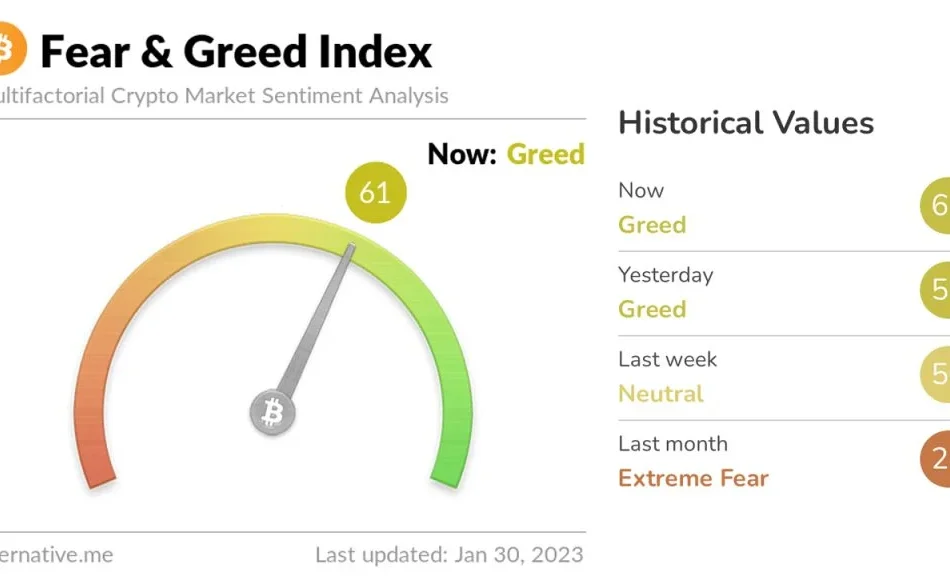
Bitcoin Fear and Greed Index Explained: A Complete Guide for Crypto Investors
Bitcoin Fear and Greed Index Explained: A Complete Guide for Crypto Investors
The Bitcoin Fear and Greed Index is a market sentiment indicator that measures whether crypto investors are fearful or greedy. It combines volatility, momentum, social trends, market dominance, and other data points into a score from 0 to 100. Many traders use it to identify potential buying opportunities during extreme fear and possible profit-taking periods during extreme greed.
Introduction
The crypto market is heavily driven by psychology. When prices rise rapidly, investors often become greedy and chase gains. When prices crash, fear takes over and many people sell at a loss. The Bitcoin Fear and Greed Index was created to measure these emotions and provide insight into the overall mood of the market.
What Is the Bitcoin Fear and Greed Index?
The Bitcoin Fear and Greed Index is a sentiment analysis tool that measures investor emotions in the cryptocurrency market.
The index assigns a score between 0 and 100:
| Score Range | Sentiment |
|---|---|
| 0-24 | Extreme Fear |
| 25-49 | Fear |
| 50 | Neutral |
| 51-74 | Greed |
| 75-100 | Extreme Greed |
The concept is based on a famous investing principle:
Be fearful when others are greedy, and greedy when others are fearful.
When investors become excessively fearful, Bitcoin may be undervalued. When investors become extremely greedy, Bitcoin could be overvalued or approaching a market correction.
Why Market Sentiment Matters in Bitcoin Investing
Unlike traditional assets, Bitcoin is highly influenced by investor emotions.
Several factors contribute to this:
- High volatility
- Speculative trading
- Global news events
- Social media influence
- Institutional adoption announcements
- Regulatory developments
As a result, sentiment often drives short-term price movements more than fundamentals.
Understanding market sentiment helps investors:
- Avoid panic selling
- Prevent FOMO buying
- Identify potential trend reversals
- Improve risk management
- Make more rational decisions
How the Bitcoin Fear and Greed Index Is Calculated
The index combines multiple data sources to create a single sentiment score.
Market Volatility
Bitcoin’s recent volatility is compared to historical averages.
Higher-than-normal volatility often signals fear because investors are uncertain about market direction.
Market Momentum and Trading Volume
Strong buying pressure and increasing volume generally indicate growing greed.
When traders aggressively buy Bitcoin, sentiment tends to become more optimistic.
Social Media Activity
Cryptocurrency discussions on social platforms are monitored.
An increase in positive Bitcoin conversations often contributes to higher greed scores.
Bitcoin Dominance
Bitcoin dominance refers to Bitcoin’s share of the total cryptocurrency market capitalization.
Rising dominance can sometimes indicate fear as investors move funds from riskier altcoins into Bitcoin.
Search Trends
Search engine activity provides valuable insights into investor interest.
Examples include:
- Bitcoin price prediction
- Should I buy Bitcoin now
- Bitcoin crash
- Bitcoin all-time high
Search behavior often reflects broader market sentiment.
Understanding Extreme Fear
Extreme fear occurs when the index falls below 25.
This typically happens during:
- Major market crashes
- Regulatory uncertainty
- Economic instability
- Negative crypto news
- Large liquidation events
What Extreme Fear Can Signal
Historically, extreme fear has often appeared near market bottoms.
This doesn’t guarantee prices will immediately rise, but it suggests investors may be overreacting.
Examples include:
- Bear market capitulation phases
- Significant Bitcoin corrections
- Panic-selling events
Many long-term investors view extreme fear as an opportunity to accumulate Bitcoin gradually.
Understanding Extreme Greed
Extreme greed occurs when the index exceeds 75.
This often coincides with:
- Rapid price rallies
- Bull market euphoria
- Media hype
- Increased retail participation
- Record-breaking Bitcoin prices
Risks of Extreme Greed
When greed becomes excessive:
- Investors ignore risks
- FOMO increases
- Market speculation accelerates
- Corrections become more likely
Extreme greed doesn’t automatically mean prices will crash, but it may indicate heightened risk.
How Successful Investors Use the Fear and Greed Index
Professional investors rarely rely on a single indicator.
Instead, they use the Fear and Greed Index alongside:
- Technical analysis
- On-chain metrics
- Bitcoin dominance
- Trading volume
- Macroeconomic trends
- Support and resistance levels
Contrarian Investing Strategy
Contrarian investors often do the opposite of the crowd.
Basic approach:
- Monitor sentiment levels.
- Look for extreme fear conditions.
- Conduct additional market analysis.
- Consider gradual accumulation.
- Reduce risk during extreme greed periods.
This strategy focuses on controlling emotions rather than predicting exact market tops and bottoms.
Common Mistakes Investors Make
Treating the Index as a Buy Signal
A low score does not guarantee a market bottom.
Prices can continue falling even when fear is extreme.
Ignoring Broader Market Conditions
Macroeconomic events still matter.
Interest rates, inflation, liquidity conditions, and regulations can significantly impact Bitcoin prices.
Following Sentiment Blindly
The index should support decision-making, not replace analysis.
Always combine sentiment data with:
- Risk assessment
- Portfolio management
- Technical indicators
- Fundamental research
Overreacting to Daily Changes
The index can fluctuate quickly.
Long-term investors should focus on broader trends rather than daily sentiment shifts.
Fear and Greed Index vs Technical Analysis
Many investors wonder whether sentiment analysis is better than technical analysis.
The answer is that both serve different purposes.
| Fear and Greed Index | Technical Analysis |
|---|---|
| Measures emotion | Measures price action |
| Identifies sentiment extremes | Identifies chart patterns |
| Useful for market psychology | Useful for entry and exit timing |
| Helps spot crowd behavior | Helps spot trends |
The strongest strategies often combine both approaches.
Best Practices for Using the Bitcoin Fear and Greed Index
To get the most value from this indicator:
- Use it as a sentiment tool, not a prediction tool.
- Monitor long-term trends.
- Combine it with technical analysis.
- Review on-chain Bitcoin metrics.
- Follow risk management rules.
- Maintain a long-term investment perspective.
- Avoid emotional decisions.
A Simple Framework
When Fear Is High:
- Review market fundamentals.
- Look for quality buying opportunities.
- Avoid panic selling.
When Greed Is High:
- Reassess portfolio risk.
- Consider profit-taking plans.
- Avoid chasing momentum blindly.
Related Metrics Worth Monitoring
The Fear and Greed Index becomes more powerful when paired with additional crypto indicators.
Useful metrics include:
- Bitcoin market sentiment
- Crypto market psychology
- Bitcoin volatility index
- On-chain analysis
- Bitcoin dominance chart
- Trading volume analysis
- Relative Strength Index (RSI)
- Market cycle indicators
- Crypto investor sentiment
- Bitcoin accumulation trends
- Long-term holder activity
- Bull market indicators
- Bear market indicators
- Crypto risk management metrics
- Bitcoin price prediction models
Can Beginners Use the Fear and Greed Index?
Absolutely.
The index is one of the easiest cryptocurrency indicators to understand.
Beginners can use it to:
- Learn market psychology
- Recognize emotional trading behavior
- Improve investment discipline
- Build long-term strategies
- Avoid common crypto investing mistakes
However, it should never be the sole basis for investment decisions.
Frequently Asked Questions
What is the Bitcoin Fear and Greed Index?
The Bitcoin Fear and Greed Index is a sentiment indicator that measures investor emotions in the cryptocurrency market on a scale from 0 to 100.
Is the Fear and Greed Index accurate?
It provides valuable insight into market sentiment but should be used alongside technical, fundamental, and on-chain analysis.
What does extreme fear mean in Bitcoin?
Extreme fear indicates that investors are highly pessimistic. Historically, it has often appeared during market downturns and potential accumulation phases.
What does extreme greed mean in Bitcoin?
Extreme greed suggests investors are overly optimistic, which can sometimes precede market corrections or increased volatility.
Can I trade Bitcoin using only the Fear and Greed Index?
No. The index should be part of a broader strategy that includes risk management, technical analysis, and market research.
How often does the Fear and Greed Index update?
Most versions of the index update daily to reflect changing market conditions and investor sentiment.
Is the Fear and Greed Index useful for long-term investors?
Yes. Long-term investors often use it to identify periods of excessive fear or greed and make more disciplined investment decisions.
Conclusion
Understanding the bitcoin fear and greed index explained concept can significantly improve your ability to navigate the cryptocurrency market. Rather than reacting emotionally to headlines, price swings, or social media hype, the index helps you understand how the broader market is feeling at any given moment.
While no indicator can perfectly predict Bitcoin’s future price movements, the Fear and Greed Index offers valuable insight into market psychology and investor behavior. When combined with technical analysis, on-chain data, and sound risk management, it can become a powerful part of your crypto investing toolkit.
For more expert Bitcoin investment insights, crypto market analysis, portfolio strategies, and educational resources, visit The Crypto Investors and stay ahead of the rapidly evolving cryptocurrency market.

What Is Bitcoin Halving and Why It Matters: A Complete Guide for Investors
What Is Bitcoin Halving and Why It Matters: A Complete Guide for Investors
Bitcoin halving is a pre-programmed event that reduces the reward miners receive for validating transactions by 50%. It occurs approximately every four years and slows the creation of new bitcoins. This mechanism helps maintain Bitcoin’s scarcity, influences mining economics, and has historically been associated with major market cycles, making it an important event for investors and the broader cryptocurrency ecosystem.
What Is Bitcoin Halving?
Bitcoin halving is a scheduled event in the Bitcoin network that reduces the number of new bitcoins awarded to miners by 50%.
Miners validate transactions and secure the Bitcoin blockchain. In return for their work, they receive newly created bitcoins as block rewards. However, Bitcoin’s anonymous creator, Satoshi Nakamoto, designed the protocol so these rewards decrease over time.
This reduction happens after every 210,000 blocks, which takes approximately four years.
Here’s how the block reward has changed over the years:
| Bitcoin Halving Event | Year | Block Reward Before | Block Reward After |
|---|---|---|---|
| First Halving | 2012 | 50 BTC | 25 BTC |
| Second Halving | 2016 | 25 BTC | 12.5 BTC |
| Third Halving | 2020 | 12.5 BTC | 6.25 BTC |
| Fourth Halving | 2024 | 6.25 BTC | 3.125 BTC |
Eventually, Bitcoin’s maximum supply will reach 21 million coins, making it one of the scarcest digital assets in existence.
How Does Bitcoin Halving Work?
To understand why Bitcoin halving matters, it’s important to understand Bitcoin mining.
Mining involves solving complex mathematical problems using specialized computers. When miners successfully validate a block of transactions, they receive a reward in Bitcoin.
The halving mechanism automatically reduces these rewards according to Bitcoin’s code.
For example:
- Before 2024, miners earned 6.25 BTC per block.
- After the 2024 halving, miners began earning 3.125 BTC per block.
- The next halving will reduce rewards even further.
No government, company, or individual controls this process. The rules are embedded directly into the Bitcoin protocol.
Bitcoin Halving and Digital Scarcity
Scarcity plays a significant role in determining value.
Precious metals such as gold derive part of their value from limited availability. Similarly, Bitcoin’s capped supply contributes to its appeal as a store of value.
Each halving reduces the rate at which new bitcoins enter circulation.
Consider the following:
- Fewer new bitcoins become available for purchase.
- Existing holders may choose to retain their assets.
- Demand can increase while supply growth decreases.
Although scarcity alone does not guarantee higher prices, it remains a crucial factor in Bitcoin’s economic model.
Historical Impact of Bitcoin Halving on Bitcoin Price
One reason investors closely monitor halvings is the historical relationship between these events and Bitcoin price cycles.
The 2012 Bitcoin Halving
- Reward reduced from 50 BTC to 25 BTC.
- Bitcoin traded near $12 during the halving period.
- Significant price appreciation followed in the subsequent year.
The 2016 Bitcoin Halving
Rewards fell from 25 BTC to 12.5 BTC. Bitcoin traded around $650. The following market cycle saw Bitcoin reach new all-time highs.
The 2020 Bitcoin Halving
- Rewards decreased from 12.5 BTC to 6.25 BTC.
- Bitcoin traded near $8,000–$9,000.
- The years that followed witnessed substantial institutional interest and record-breaking prices.
It’s important to remember that correlation does not guarantee causation. Factors such as macroeconomic conditions, investor sentiment, regulatory developments, and adoption trends also influence Bitcoin prices.
How Bitcoin Halving Affects Miners
Bitcoin miners experience the most immediate impact from halving events.
Because block rewards decrease by 50%, mining profitability can come under pressure.
Miners typically respond in several ways:
- Upgrading to more energy-efficient hardware.
- Reducing operational costs.
- Relocating to regions with cheaper electricity.
- Relying more heavily on transaction fees.
Less efficient mining operations may struggle to remain profitable after a halving.
However, if Bitcoin prices rise over time, mining profitability can improve despite lower rewards.
Bitcoin Halving vs Traditional Monetary Systems
The contrast between Bitcoin and fiat currencies highlights why many investors find Bitcoin appealing.
| Feature | Bitcoin | Traditional Fiat Currency |
|---|---|---|
| Supply Limit | 21 Million BTC | No fixed limit |
| Inflation Control | Algorithm-based | Central bank policies |
| Issuance Schedule | Predictable | Flexible |
| Transparency | Public blockchain | Policy-driven |
| Monetary Authority | Decentralized | Centralized |
Bitcoin’s transparent and predetermined supply schedule offers a level of predictability rarely found in conventional financial systems.
Bitcoin Halving Guarantees Price Increases
No event can guarantee future returns. Historical performance should never be treated as certainty.
Bitcoin Becomes More Valuable Overnight
Market reactions often unfold gradually over months rather than immediately after a halving.
Bitcoin Halving Is a Manual Decision
The process is fully automated and coded into Bitcoin’s protocol.
What Happens After All Bitcoin Halvings Are Complete?
One of the most fascinating aspects of Bitcoin is that its monetary policy has already been defined decades into the future.
Since Bitcoin halving reduces mining rewards by 50% approximately every four years, there will eventually come a point when no new bitcoins are created. Based on the current schedule, the last bitcoin is expected to be mined around the year 2140.
At that stage:
- The total Bitcoin supply will reach 21 million BTC.
- Miners will no longer receive block rewards.
- Transaction fees will become miners’ primary source of income.
- The Bitcoin network will continue operating through decentralized validation.
This design demonstrates Bitcoin’s long-term approach to sustainability and scarcity.
Does Bitcoin Halving Always Lead to a Bull Market?
This is one of the most searched questions related to Bitcoin halving.
Historically, Bitcoin has experienced significant price appreciation in the months following previous halving events. However, investors should avoid assuming that history will repeat itself exactly.
Several factors influence Bitcoin’s price, including:
- Global economic conditions.
- Institutional adoption.
- Government regulations.
- Interest rates and monetary policies.
- Investor sentiment.
- Technological developments within the crypto industry.
The halving reduces the rate of new supply entering the market, but demand remains the determining factor behind long-term price growth.
A balanced approach involves viewing halving as one piece of a broader investment framework rather than a guaranteed profit signal.
Why Bitcoin Halving Matters Beyond Investors
Bitcoin halving doesn’t only affect traders and long-term holders. Its influence extends across the broader digital asset ecosystem.
Impact on Cryptocurrency Markets
Bitcoin often sets the tone for the wider crypto market. Major Bitcoin events can affect market sentiment and liquidity across other cryptocurrencies.
Impact on Public Awareness
Every halving cycle tends to renew public interest in Bitcoin, attracting new users and increasing educational discussions around decentralized finance.
Key Takeaways About Bitcoin Halving
If you’re still wondering what is Bitcoin halving and why it matters, remember these essential points:
- Bitcoin halving occurs approximately every four years.
- Mining rewards are reduced by 50% during each event.
- The mechanism limits Bitcoin’s supply growth.
- Bitcoin’s total supply is capped at 21 million coins.
- Historical halvings have coincided with important market cycles.
- Halving influences miners, investors, and the broader cryptocurrency ecosystem.
- Understanding halving can support more informed investment decisions.
Bitcoin halving isn’t merely a technical adjustment within the network. It represents the foundation of Bitcoin’s monetary policy and its approach to digital scarcity.
Frequently Asked Questions
What is Bitcoin halving in simple terms?
Bitcoin halving is an event that cuts the rewards miners receive for validating transactions by 50%. It occurs roughly every four years to control the supply of new bitcoins entering circulation.
Why does Bitcoin halving matter?
Bitcoin halving matters because it reduces supply growth, reinforces scarcity, impacts mining economics, and often influences investor sentiment surrounding Bitcoin.
How often does Bitcoin halving happen?
Bitcoin halving takes place every 210,000 blocks, which is approximately every four years.
Does Bitcoin’s price always increase after halving?
No. While previous halvings have been followed by significant price increases, past performance does not guarantee future results. Market conditions and demand also play critical roles.
How many Bitcoin halvings are left?
Several halvings remain before Bitcoin reaches its maximum supply of 21 million coins. The final bitcoin is expected to be mined around 2140.
Can Bitcoin halving affect mining profitability?
Yes. Since miners receive fewer bitcoins after each halving, less efficient operations may face profitability challenges unless supported by higher Bitcoin prices or lower operating costs.
Is Bitcoin halving good for investors?
Bitcoin halving can be beneficial from a long-term perspective because it reduces supply growth. However, all investments involve risks, and investors should conduct thorough research before making financial decisions.
Conclusion
Understanding what is Bitcoin halving and why it matters is crucial for anyone interested in Bitcoin, whether you’re a curious beginner, a long-term investor, or someone exploring the future of digital assets.
Bitcoin halving is much more than a scheduled reduction in mining rewards. It is the mechanism that preserves Bitcoin’s scarcity, supports its predictable monetary policy, and differentiates it from traditional currencies with unlimited supply potential.
Although halvings have historically aligned with important periods in Bitcoin’s market evolution, they should never be viewed as guaranteed indicators of future price performance. Successful investing requires education, patience, risk management, and a long-term mindset.
At TheCryptoInvestors.com, we are committed to helping readers navigate the rapidly evolving world of cryptocurrency through research-driven insights, practical investment knowledge, and easy-to-understand educational content. If you’re looking to deepen your understanding of Bitcoin, improve your crypto investment strategy, or stay informed about major market developments, explore more expert resources available on our website.
The more you understand Bitcoin’s fundamentals today, the better prepared you’ll be to make confident decisions in tomorrow’s digital economy.

Bitcoin Education for Investors: A Complete Guide to Smarter Investing
Bitcoin Education for Investors: Bitcoin education for investors is essential for understanding how Bitcoin works, managing risks, evaluating market trends, and making informed investment decisions. A strong educational foundation helps investors avoid common mistakes, develop long-term strategies, and navigate the rapidly evolving cryptocurrency market with confidence.
Bitcoin Education for Investors: Introduction
Bitcoin has transformed from an experimental digital currency into one of the world’s most discussed investment assets. Over the past decade, millions of investors have entered the cryptocurrency market seeking growth opportunities, portfolio diversification, and exposure to financial innovation.
However, investing in Bitcoin without proper knowledge can be risky. Market volatility, security concerns, emotional decision-making, and misinformation often lead investors to costly mistakes. This is why bitcoin education for investors has become more important than ever.
Whether you’re a beginner exploring cryptocurrency for the first time or an experienced investor looking to refine your strategy, understanding Bitcoin’s fundamentals can significantly improve your investment decisions.
This guide covers everything investors need to know about Bitcoin, including how it works, investment strategies, risk management techniques, market analysis, and best practices for long-term success.
Why Bitcoin Education Matters for Investors
Many investors enter the cryptocurrency market after hearing success stories or seeing rapid price increases. Unfortunately, investing based on hype rarely leads to sustainable results.
Bitcoin education helps investors:
- Understand how Bitcoin works
- Evaluate investment opportunities objectively
- Reduce emotional decision-making
- Manage risks effectively
- Protect digital assets securely
- Develop long-term investment strategies
- Identify market trends and cycles
Knowledge creates confidence. Investors who understand Bitcoin are often better equipped to handle market fluctuations and make rational decisions during periods of uncertainty.
Understanding Bitcoin Fundamentals
Before investing, it’s important to understand what Bitcoin actually is.
What Is Bitcoin?
Bitcoin is a decentralized digital currency that operates without a central authority such as a government or bank. It was introduced in 2009 by an anonymous creator known as Satoshi Nakamoto.
Unlike traditional currencies, Bitcoin exists entirely online and uses blockchain technology to record transactions securely and transparently.
What Is Blockchain Technology?
Blockchain is a distributed ledger that stores transaction data across thousands of computers worldwide.
Key benefits include:
- Transparency
- Security
- Immutability
- Decentralization
- Global accessibility
Every Bitcoin transaction is verified by the network and permanently recorded on the blockchain.
Why Bitcoin Has Value
Bitcoin’s value comes from several factors:
- Limited supply of 21 million coins
- Growing adoption worldwide
- Decentralized structure
- Strong security network
- Increasing institutional interest
These characteristics make Bitcoin unique compared to traditional financial assets.
Essential Bitcoin Investment Concepts Every Investor Should Know
Successful investing begins with understanding key concepts.
Market Capitalization
Market capitalization represents the total value of all Bitcoin in circulation.
It is calculated by multiplying:
Bitcoin Price × Circulating Supply
Market cap helps investors compare Bitcoin with other cryptocurrencies and traditional assets.
Volatility
Bitcoin is known for price volatility.
Prices can move significantly within hours or days. Investors should understand that volatility is normal and avoid making emotional decisions based on short-term movements.
Liquidity
Liquidity refers to how easily Bitcoin can be bought or sold without significantly affecting its price.
Bitcoin is generally considered one of the most liquid cryptocurrency assets.
How New Investors Can Start Learning Bitcoin
Learning Bitcoin doesn’t happen overnight. The best approach is gradual education.
Study Bitcoin Fundamentals
Begin by understanding:
- Blockchain technology
- Bitcoin mining
- Supply and demand
- Wallets and storage
- Network security
Follow Reliable Educational Sources
Quality information is essential.
Investors should follow:
- Industry reports
- Educational blogs
- Research platforms
- Reputable cryptocurrency news websites
- Professional analysts
Learn Basic Technical Analysis
Technical analysis helps investors understand price movements and market trends.
Key concepts include:
- Support levels
- Resistance levels
- Trend lines
- Volume indicators
- Moving averages
These tools can assist in identifying potential entry and exit points.
Bitcoin Investment Strategies for Long-Term Success
There is no one-size-fits-all strategy. Investors should choose an approach aligned with their goals and risk tolerance.
Buy and Hold Strategy
This is one of the most popular Bitcoin investment strategies.
Investors purchase Bitcoin and hold it for years, believing its long-term value will continue to grow.
Benefits include:
- Reduced trading stress
- Lower transaction costs
- Simplicity
- Long-term growth potential
Dollar Cost Averaging (DCA)
Dollar Cost Averaging involves investing a fixed amount regularly regardless of market price.
Benefits include:
- Reduces emotional investing
- Minimizes timing risk
- Builds disciplined investing habits
Many experienced investors prefer DCA for long-term Bitcoin accumulation.
Portfolio Diversification
Bitcoin should be part of a balanced investment portfolio.
Diversification can help reduce overall investment risk while maintaining growth opportunities.
Risk Management in Bitcoin Investing
One of the most important aspects of bitcoin education for investors is risk management.
Never Invest More Than You Can Afford to Lose
Bitcoin remains a high-risk asset.
Investors should only allocate funds they are comfortable holding through market volatility.
Set Clear Investment Goals
Ask yourself:
- Are you investing for retirement?
- Wealth growth?
- Portfolio diversification?
- Long-term capital appreciation?
Clear goals improve decision-making.
Avoid Emotional Trading
Fear and greed are responsible for many investment mistakes.
Successful investors typically:
- Follow a plan
- Ignore short-term noise
- Focus on long-term objectives
Use Secure Storage Solutions
Protecting Bitcoin is just as important as buying it.
Investors should learn about:
- Hardware wallets
- Cold storage
- Two-factor authentication
- Private key management
Security education can prevent significant losses.
Common Bitcoin Investing Mistakes to Avoid
Even experienced investors make mistakes.
H3: Investing Based on Hype
Social media trends and viral headlines often create unrealistic expectations.
Always conduct independent research before investing.
Trying to Time the Market
Predicting exact market tops and bottoms is extremely difficult.
Many investors achieve better results through disciplined investing rather than constant trading.
Ignoring Risk Management
Risk management should never be an afterthought.
A strong investment strategy includes position sizing, diversification, and security measures.
Neglecting Continuous Education
The cryptocurrency industry evolves rapidly.
Successful investors continue learning about:
- Market developments
- Regulatory changes
- New technologies
- Investment opportunities
How Institutional Adoption Is Changing Bitcoin Investing
Institutional adoption has significantly influenced Bitcoin’s growth.
Large organizations, investment funds, and corporations increasingly view Bitcoin as a legitimate asset class.
Benefits of institutional participation include:
- Increased market credibility
- Higher liquidity
- Greater adoption
- Enhanced infrastructure development
As adoption continues, investors who understand market dynamics may be better positioned to identify opportunities.
The Future of Bitcoin Education for Investors
As cryptocurrency adoption expands, investor education will become even more important.
Future trends include:
- Improved educational platforms
- Increased regulatory clarity
- Enhanced investment tools
- Greater institutional participation
- Mainstream financial integration
Investors who prioritize learning today may gain a significant advantage as the market evolves.
Frequently Asked Questions
What is bitcoin education for investors?
Bitcoin education for investors involves learning about Bitcoin, blockchain technology, market analysis, risk management, security, and investment strategies to make informed decisions.
Why is Bitcoin education important before investing?
Education helps investors understand risks, avoid common mistakes, improve decision-making, and develop effective long-term investment strategies.
Is Bitcoin suitable for beginner investors?
Bitcoin can be suitable for beginners who take time to learn the fundamentals and invest responsibly according to their risk tolerance.
What is the safest Bitcoin investment strategy?
Many investors consider Dollar Cost Averaging (DCA) one of the safer strategies because it reduces market timing risk and promotes consistent investing.
H3: How much Bitcoin should a beginner buy?
There is no universal amount. Investors should only invest money they can afford to hold long term and potentially lose without affecting financial stability.
Can Bitcoin be part of a diversified portfolio?
Yes. Many investors use Bitcoin as a diversification asset alongside stocks, bonds, and other investments.
Where can I learn more about Bitcoin investing?
Reliable educational resources, professional market analysis, and trusted cryptocurrency research platforms can help investors build knowledge and confidence.
Conclusion: Build Your Bitcoin Knowledge Before You Invest
The cryptocurrency market offers exciting opportunities, but success starts with education. Understanding Bitcoin fundamentals, investment strategies, risk management principles, and market behavior can help investors make smarter decisions and avoid costly mistakes.
At The Crypto Investors, we believe informed investors make better investors. Our mission is to provide actionable cryptocurrency insights, market analysis, Bitcoin investment education, and expert guidance that helps you navigate the digital asset landscape with confidence.
Whether you’re taking your first steps into Bitcoin or refining your long-term investment strategy, our resources are designed to help you stay informed, manage risk, and identify opportunities in an evolving market.
Explore The Crypto Investors today and take your Bitcoin investing journey to the next level with trusted education, expert insights, and practical investment knowledge.
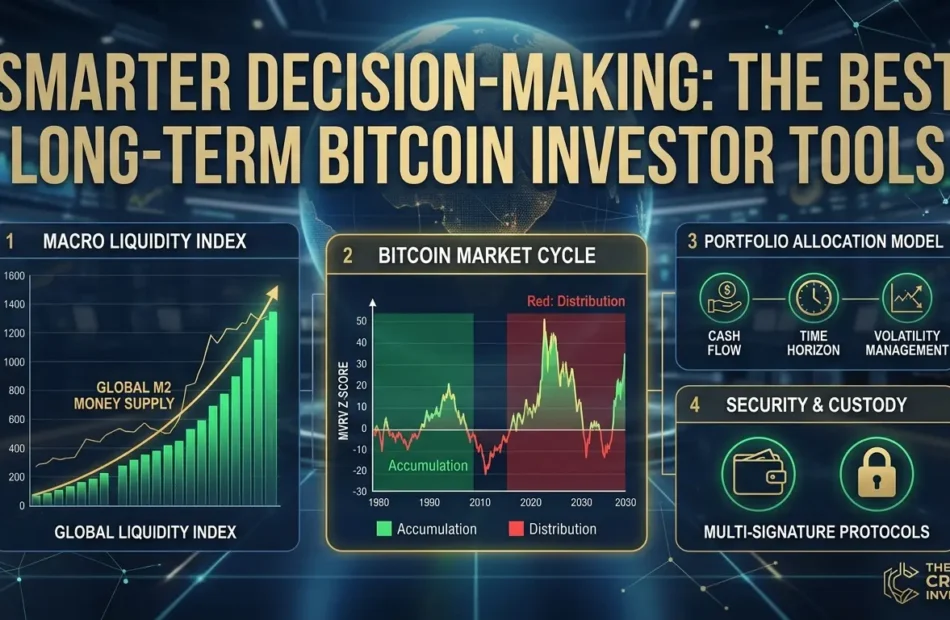
Bitcoin On-Chain Indicators for Beginners: A Simple Guide to Understanding Bitcoin Market Trends
Bitcoin On-Chain Indicators for Beginners: A Simple Guide
Bitcoin on-chain indicators for beginners: Bitcoin is the only major asset class that allows investors to study market behavior directly from the blockchain. Unlike traditional markets, Bitcoin transactions are publicly recorded, making it possible to track investor sentiment, network activity, and potential market trends.
If you’re new to Bitcoin investing, understanding on-chain indicators can help you make more informed decisions. In this beginner-friendly guide, we’ll explain the most important Bitcoin on-chain indicators and how you can use them without getting overwhelmed.
What Are Bitcoin On-Chain Indicators?
Bitcoin on-chain indicators are metrics derived from blockchain data. They help investors analyze how Bitcoin holders behave, how coins move across the network, and whether the market may be overheated or undervalued.
Because Bitcoin operates on a transparent ledger, anyone can access this data and use it to gain insights into market conditions.
Why On-Chain Analysis Matters
- Reveals investor behavior.
- Identifies accumulation and distribution phases.
- Helps understand long-term market cycles.
- Provides data-driven insights beyond price charts.
MVRV Ratio (Market Value to Realized Value)
The MVRV Ratio compares Bitcoin’s market value with its realized value.
What It Tells Investors
- High MVRV levels can indicate that many holders are in profit, increasing the risk of selling pressure.
- Lower MVRV levels may suggest undervaluation opportunities.
Historically, extreme MVRV readings have coincided with major Bitcoin cycle turning points.
SOPR (Spent Output Profit Ratio)
SOPR measures whether investors are selling Bitcoin at a profit or a loss.
How Beginners Can Use SOPR
- SOPR above 1 indicates coins are being sold in profit.
- SOPR below 1 suggests investors are realizing losses.
This metric helps identify shifts in market sentiment.
Exchange Inflows and Outflows
Exchange flow data tracks Bitcoin moving into or out of exchanges.
What Exchange Flows Mean
- Increasing exchange inflows may indicate potential selling activity.
- Large exchange outflows often suggest long-term holding behavior.
Many investors monitor exchange reserves to understand supply dynamics.
Active Addresses
Active addresses represent the number of unique Bitcoin addresses participating in transactions.
Why This Metric Matters
- Rising active addresses can signal growing network adoption.
- Declining activity may indicate reduced market participation.
However, this indicator works best when combined with other metrics.
Long-Term Holder Supply
Long-term holders are wallets that have held Bitcoin for extended periods without moving coins.
What It Reveals
- Increasing long-term holder supply may suggest confidence among experienced investors.
- Decreasing supply can indicate profit-taking.
This metric is widely used in Bitcoin cycle analysis.
Common Mistakes Beginners Should Avoid
Relying on One Indicator
No single metric predicts market tops or bottoms perfectly.
Ignoring Market Context
Macroeconomic conditions and institutional flows also influence Bitcoin prices.
Chasing Short-Term Signals
Most on-chain indicators are more effective for medium- and long-term analysis rather than daily trading decisions.
Tools to Track Bitcoin On-Chain Indicators
Popular Platforms
- Glassnode
- CryptoQuant
- Coin Metrics
- The Crypto Investors Dashboard
These platforms simplify blockchain data into visual charts that are easier for beginners to understand
Frequently Asked Questions (FAQs)
What are Bitcoin on-chain indicators?
Bitcoin on-chain indicators are metrics derived from blockchain data that help investors analyze market behavior and network activity.
Which Bitcoin on-chain indicator is best for beginners?
MVRV Ratio and exchange flow data are among the easiest indicators for beginners to understand.
Are on-chain indicators accurate?
They provide valuable insights but should not be used in isolation. Combining multiple indicators improves decision-making.
Can on-chain indicators predict Bitcoin prices?
No indicator can predict prices with certainty. They are tools used to assess probabilities and market conditions.
Where can I track Bitcoin on-chain metrics?
Platforms such as Glassnode, CryptoQuant, Coin Metrics, and The Crypto Investors offer access to on-chain data dashboards.
Conclusion:
Understanding Bitcoin on-chain indicators can give beginners a clearer picture of what is happening beneath the surface of the market. Metrics like MVRV, SOPR, exchange flows, active addresses, and long-term holder supply offer valuable insights that go beyond traditional price charts. While no indicator guarantees success, combining on-chain analysis with sound risk management can help investors make more informed decisions.
At The Crypto Investors, we are committed to helping Bitcoin investors navigate the market through educational resources, market insights, and data-driven strategies. Whether you are just beginning your Bitcoin journey or looking to strengthen your investment approach, visit https://thecryptoinvestors.com/ to explore tools and resources designed to support smarter investing.