
Bitcoin On-Chain Indicators for Beginners: A Simple Guide to Understanding Bitcoin Market Trends
Bitcoin On-Chain Indicators for Beginners: A Simple Guide
Bitcoin on-chain indicators for beginners: Bitcoin is the only major asset class that allows investors to study market behavior directly from the blockchain. Unlike traditional markets, Bitcoin transactions are publicly recorded, making it possible to track investor sentiment, network activity, and potential market trends.
If you’re new to Bitcoin investing, understanding on-chain indicators can help you make more informed decisions. In this beginner-friendly guide, we’ll explain the most important Bitcoin on-chain indicators and how you can use them without getting overwhelmed.
What Are Bitcoin On-Chain Indicators?
Bitcoin on-chain indicators are metrics derived from blockchain data. They help investors analyze how Bitcoin holders behave, how coins move across the network, and whether the market may be overheated or undervalued.
Because Bitcoin operates on a transparent ledger, anyone can access this data and use it to gain insights into market conditions.
Why On-Chain Analysis Matters
- Reveals investor behavior.
- Identifies accumulation and distribution phases.
- Helps understand long-term market cycles.
- Provides data-driven insights beyond price charts.
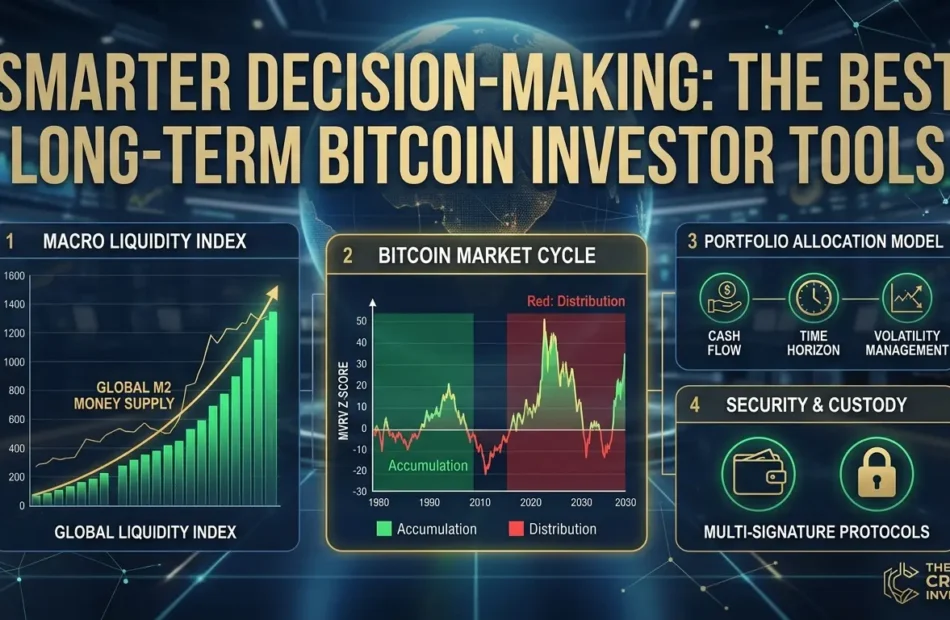
MVRV Ratio (Market Value to Realized Value)
The MVRV Ratio compares Bitcoin’s market value with its realized value.
What It Tells Investors
- High MVRV levels can indicate that many holders are in profit, increasing the risk of selling pressure.
- Lower MVRV levels may suggest undervaluation opportunities.
Historically, extreme MVRV readings have coincided with major Bitcoin cycle turning points.
SOPR (Spent Output Profit Ratio)
SOPR measures whether investors are selling Bitcoin at a profit or a loss.
How Beginners Can Use SOPR
- SOPR above 1 indicates coins are being sold in profit.
- SOPR below 1 suggests investors are realizing losses.
This metric helps identify shifts in market sentiment.
Exchange Inflows and Outflows
Exchange flow data tracks Bitcoin moving into or out of exchanges.
What Exchange Flows Mean
- Increasing exchange inflows may indicate potential selling activity.
- Large exchange outflows often suggest long-term holding behavior.
Many investors monitor exchange reserves to understand supply dynamics.
Active Addresses
Active addresses represent the number of unique Bitcoin addresses participating in transactions.
Why This Metric Matters
- Rising active addresses can signal growing network adoption.
- Declining activity may indicate reduced market participation.
However, this indicator works best when combined with other metrics.
Long-Term Holder Supply
Long-term holders are wallets that have held Bitcoin for extended periods without moving coins.
What It Reveals
- Increasing long-term holder supply may suggest confidence among experienced investors.
- Decreasing supply can indicate profit-taking.
This metric is widely used in Bitcoin cycle analysis.
Common Mistakes Beginners Should Avoid
Relying on One Indicator
No single metric predicts market tops or bottoms perfectly.
Ignoring Market Context
Macroeconomic conditions and institutional flows also influence Bitcoin prices.
Chasing Short-Term Signals
Most on-chain indicators are more effective for medium- and long-term analysis rather than daily trading decisions.
Tools to Track Bitcoin On-Chain Indicators
Popular Platforms
- Glassnode
- CryptoQuant
- Coin Metrics
- The Crypto Investors Dashboard
These platforms simplify blockchain data into visual charts that are easier for beginners to understand
Frequently Asked Questions (FAQs)
What are Bitcoin on-chain indicators?
Bitcoin on-chain indicators are metrics derived from blockchain data that help investors analyze market behavior and network activity.
Which Bitcoin on-chain indicator is best for beginners?
MVRV Ratio and exchange flow data are among the easiest indicators for beginners to understand.
Are on-chain indicators accurate?
They provide valuable insights but should not be used in isolation. Combining multiple indicators improves decision-making.
Can on-chain indicators predict Bitcoin prices?
No indicator can predict prices with certainty. They are tools used to assess probabilities and market conditions.
Where can I track Bitcoin on-chain metrics?
Platforms such as Glassnode, CryptoQuant, Coin Metrics, and The Crypto Investors offer access to on-chain data dashboards.
Conclusion:
Understanding Bitcoin on-chain indicators can give beginners a clearer picture of what is happening beneath the surface of the market. Metrics like MVRV, SOPR, exchange flows, active addresses, and long-term holder supply offer valuable insights that go beyond traditional price charts. While no indicator guarantees success, combining on-chain analysis with sound risk management can help investors make more informed decisions.
At The Crypto Investors, we are committed to helping Bitcoin investors navigate the market through educational resources, market insights, and data-driven strategies. Whether you are just beginning your Bitcoin journey or looking to strengthen your investment approach, visit https://thecryptoinvestors.com/ to explore tools and resources designed to support smarter investing.