
Bitcoin Fear and Greed Index Explained: A Complete Guide for Crypto Investors
Bitcoin Fear and Greed Index Explained: A Complete Guide for Crypto Investors
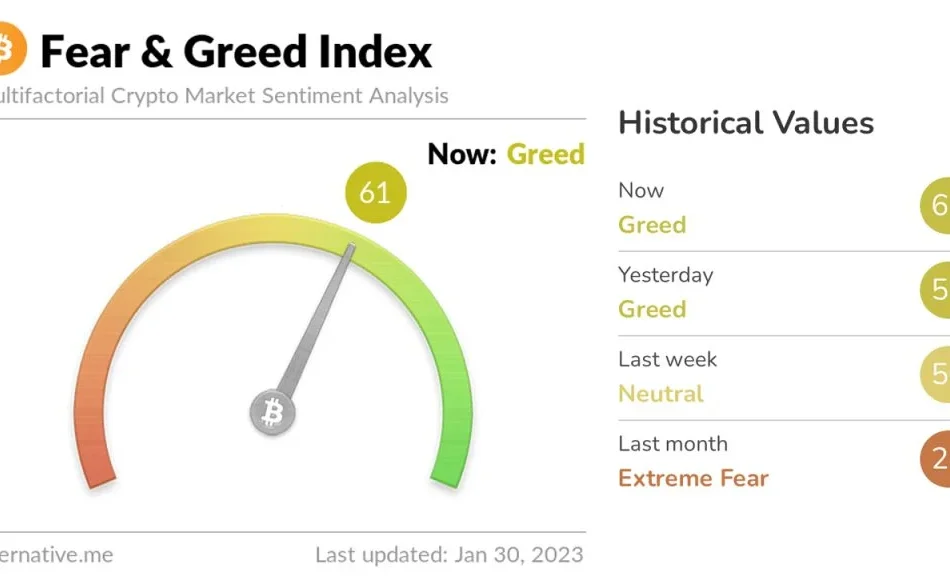
The Bitcoin Fear and Greed Index is a market sentiment indicator that measures whether crypto investors are fearful or greedy. It combines volatility, momentum, social trends, market dominance, and other data points into a score from 0 to 100. Many traders use it to identify potential buying opportunities during extreme fear and possible profit-taking periods during extreme greed.
Introduction
The crypto market is heavily driven by psychology. When prices rise rapidly, investors often become greedy and chase gains. When prices crash, fear takes over and many people sell at a loss. The Bitcoin Fear and Greed Index was created to measure these emotions and provide insight into the overall mood of the market.
What Is the Bitcoin Fear and Greed Index?
The Bitcoin Fear and Greed Index is a sentiment analysis tool that measures investor emotions in the cryptocurrency market.
The index assigns a score between 0 and 100:
| Score Range | Sentiment |
|---|---|
| 0-24 | Extreme Fear |
| 25-49 | Fear |
| 50 | Neutral |
| 51-74 | Greed |
| 75-100 | Extreme Greed |
The concept is based on a famous investing principle:
Be fearful when others are greedy, and greedy when others are fearful.
When investors become excessively fearful, Bitcoin may be undervalued. When investors become extremely greedy, Bitcoin could be overvalued or approaching a market correction.
Why Market Sentiment Matters in Bitcoin Investing
Unlike traditional assets, Bitcoin is highly influenced by investor emotions.
Several factors contribute to this:
- High volatility
- Speculative trading
- Global news events
- Social media influence
- Institutional adoption announcements
- Regulatory developments
As a result, sentiment often drives short-term price movements more than fundamentals.
Understanding market sentiment helps investors:
- Avoid panic selling
- Prevent FOMO buying
- Identify potential trend reversals
- Improve risk management
- Make more rational decisions
How the Bitcoin Fear and Greed Index Is Calculated
The index combines multiple data sources to create a single sentiment score.
Market Volatility
Bitcoin’s recent volatility is compared to historical averages.
Higher-than-normal volatility often signals fear because investors are uncertain about market direction.
Market Momentum and Trading Volume
Strong buying pressure and increasing volume generally indicate growing greed.
When traders aggressively buy Bitcoin, sentiment tends to become more optimistic.
Social Media Activity
Cryptocurrency discussions on social platforms are monitored.
An increase in positive Bitcoin conversations often contributes to higher greed scores.
Bitcoin Dominance
Bitcoin dominance refers to Bitcoin’s share of the total cryptocurrency market capitalization.
Rising dominance can sometimes indicate fear as investors move funds from riskier altcoins into Bitcoin.
Search Trends
Search engine activity provides valuable insights into investor interest.
Examples include:
- Bitcoin price prediction
- Should I buy Bitcoin now
- Bitcoin crash
- Bitcoin all-time high
Search behavior often reflects broader market sentiment.
Understanding Extreme Fear
Extreme fear occurs when the index falls below 25.
This typically happens during:
- Major market crashes
- Regulatory uncertainty
- Economic instability
- Negative crypto news
- Large liquidation events
What Extreme Fear Can Signal
Historically, extreme fear has often appeared near market bottoms.
This doesn’t guarantee prices will immediately rise, but it suggests investors may be overreacting.
Examples include:
- Bear market capitulation phases
- Significant Bitcoin corrections
- Panic-selling events
Many long-term investors view extreme fear as an opportunity to accumulate Bitcoin gradually.
Understanding Extreme Greed
Extreme greed occurs when the index exceeds 75.
This often coincides with:
- Rapid price rallies
- Bull market euphoria
- Media hype
- Increased retail participation
- Record-breaking Bitcoin prices
Risks of Extreme Greed
When greed becomes excessive:
- Investors ignore risks
- FOMO increases
- Market speculation accelerates
- Corrections become more likely
Extreme greed doesn’t automatically mean prices will crash, but it may indicate heightened risk.
How Successful Investors Use the Fear and Greed Index
Professional investors rarely rely on a single indicator.
Instead, they use the Fear and Greed Index alongside:
- Technical analysis
- On-chain metrics
- Bitcoin dominance
- Trading volume
- Macroeconomic trends
- Support and resistance levels
Contrarian Investing Strategy
Contrarian investors often do the opposite of the crowd.
Basic approach:
- Monitor sentiment levels.
- Look for extreme fear conditions.
- Conduct additional market analysis.
- Consider gradual accumulation.
- Reduce risk during extreme greed periods.
This strategy focuses on controlling emotions rather than predicting exact market tops and bottoms.
Common Mistakes Investors Make
Treating the Index as a Buy Signal
A low score does not guarantee a market bottom.
Prices can continue falling even when fear is extreme.
Ignoring Broader Market Conditions
Macroeconomic events still matter.
Interest rates, inflation, liquidity conditions, and regulations can significantly impact Bitcoin prices.
Following Sentiment Blindly
The index should support decision-making, not replace analysis.
Always combine sentiment data with:
- Risk assessment
- Portfolio management
- Technical indicators
- Fundamental research
Overreacting to Daily Changes
The index can fluctuate quickly.
Long-term investors should focus on broader trends rather than daily sentiment shifts.
Fear and Greed Index vs Technical Analysis
Many investors wonder whether sentiment analysis is better than technical analysis.
The answer is that both serve different purposes.
| Fear and Greed Index | Technical Analysis |
|---|---|
| Measures emotion | Measures price action |
| Identifies sentiment extremes | Identifies chart patterns |
| Useful for market psychology | Useful for entry and exit timing |
| Helps spot crowd behavior | Helps spot trends |
The strongest strategies often combine both approaches.
Best Practices for Using the Bitcoin Fear and Greed Index
To get the most value from this indicator:
- Use it as a sentiment tool, not a prediction tool.
- Monitor long-term trends.
- Combine it with technical analysis.
- Review on-chain Bitcoin metrics.
- Follow risk management rules.
- Maintain a long-term investment perspective.
- Avoid emotional decisions.
A Simple Framework
When Fear Is High:
- Review market fundamentals.
- Look for quality buying opportunities.
- Avoid panic selling.
When Greed Is High:
- Reassess portfolio risk.
- Consider profit-taking plans.
- Avoid chasing momentum blindly.
Related Metrics Worth Monitoring
The Fear and Greed Index becomes more powerful when paired with additional crypto indicators.
Useful metrics include:
- Bitcoin market sentiment
- Crypto market psychology
- Bitcoin volatility index
- On-chain analysis
- Bitcoin dominance chart
- Trading volume analysis
- Relative Strength Index (RSI)
- Market cycle indicators
- Crypto investor sentiment
- Bitcoin accumulation trends
- Long-term holder activity
- Bull market indicators
- Bear market indicators
- Crypto risk management metrics
- Bitcoin price prediction models
Can Beginners Use the Fear and Greed Index?
Absolutely.
The index is one of the easiest cryptocurrency indicators to understand.
Beginners can use it to:
- Learn market psychology
- Recognize emotional trading behavior
- Improve investment discipline
- Build long-term strategies
- Avoid common crypto investing mistakes
However, it should never be the sole basis for investment decisions.
Frequently Asked Questions
What is the Bitcoin Fear and Greed Index?
The Bitcoin Fear and Greed Index is a sentiment indicator that measures investor emotions in the cryptocurrency market on a scale from 0 to 100.
Is the Fear and Greed Index accurate?
It provides valuable insight into market sentiment but should be used alongside technical, fundamental, and on-chain analysis.
What does extreme fear mean in Bitcoin?
Extreme fear indicates that investors are highly pessimistic. Historically, it has often appeared during market downturns and potential accumulation phases.
What does extreme greed mean in Bitcoin?
Extreme greed suggests investors are overly optimistic, which can sometimes precede market corrections or increased volatility.
Can I trade Bitcoin using only the Fear and Greed Index?
No. The index should be part of a broader strategy that includes risk management, technical analysis, and market research.
How often does the Fear and Greed Index update?
Most versions of the index update daily to reflect changing market conditions and investor sentiment.
Is the Fear and Greed Index useful for long-term investors?
Yes. Long-term investors often use it to identify periods of excessive fear or greed and make more disciplined investment decisions.
Conclusion
Understanding the bitcoin fear and greed index explained concept can significantly improve your ability to navigate the cryptocurrency market. Rather than reacting emotionally to headlines, price swings, or social media hype, the index helps you understand how the broader market is feeling at any given moment.
While no indicator can perfectly predict Bitcoin’s future price movements, the Fear and Greed Index offers valuable insight into market psychology and investor behavior. When combined with technical analysis, on-chain data, and sound risk management, it can become a powerful part of your crypto investing toolkit.
For more expert Bitcoin investment insights, crypto market analysis, portfolio strategies, and educational resources, visit The Crypto Investors and stay ahead of the rapidly evolving cryptocurrency market.